
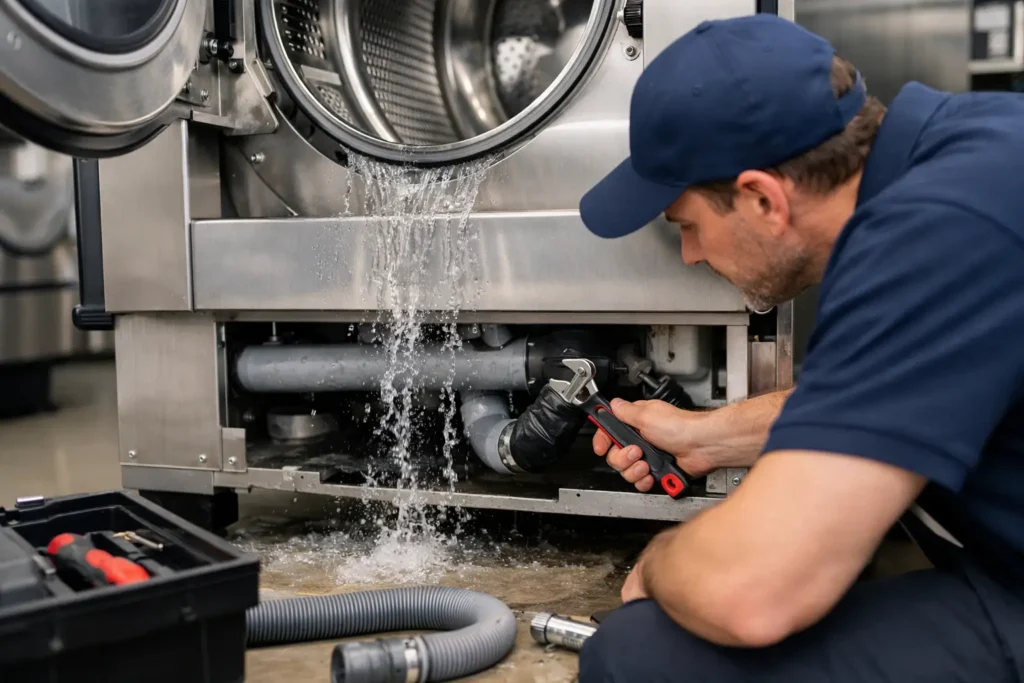
A washer-extractor that will not drain is not a small nuisance in a commercial laundry. It stalls the next load, throws off labor timing, and can turn one machine fault into a production problem across the floor. These washer extractor drain troubleshooting steps are built for operators and maintenance teams who need to identify the fault fast, protect uptime, and decide whether the issue is a blockage, a component failure, or a control problem.
Start washer extractor drain troubleshooting steps with the symptom
Before opening panels or ordering parts, confirm exactly what the machine is doing. A washer-extractor that drains slowly is a different case from one that does not drain at all. A unit that drains but leaves residual water may point to a partial restriction, while a unit that tries to drain and trips an error code may be dealing with a pump, valve, sensor, or control issue.
The first practical check is cycle behavior. Does the drain function fail on every program or only on specific cycles? Do you hear the pump energize? Does the drain valve open? Is there standing water visible in the basket after the wash segment ends? These details matter because they narrow the fault path quickly.
If the machine has an error display, record the code before resetting anything. Too many drain calls get harder to diagnose because someone cycled power and erased the first useful clue.
Rule out the simple restrictions first
In commercial laundry, the most common drain problem is still a blockage. It is not always dramatic. A drain line can be partially restricted by lint, debris, labels, coins, mop residue, or hardened chemical buildup and still pass enough water to look normal at first.
Start at the obvious points. Inspect the drain outlet, hose, standpipe, floor drain, lint trap area, and any external strainer or catch basket. If the machine is connected to a shared building drain, remember that the restriction may be outside the washer-extractor itself. Operators sometimes replace a pump when the actual issue is a slow floor drain backing up under peak production.
Look closely at hose routing. A kinked hose, a crushed flexible section behind the machine, or an improper drain height can all reduce discharge. In facilities where machines have been moved during cleaning or installation, hose position is worth checking before anything else.
If the machine has a drain sump or coin trap access, inspect it carefully and safely. Small obstructions often collect there and create intermittent symptoms. One day the machine drains slowly, the next day not at all.
Check whether the machine uses a drain pump or drain valve
Not every washer-extractor drains the same way. Some models use a drain pump to move water out. Others rely on a drain valve, sometimes air-operated or electrically actuated, to release water quickly through gravity. High-speed commercial units may use one approach or a combination depending on machine design.
That distinction changes the troubleshooting path. If you are working on a pump-driven machine, the key questions are whether the pump receives power, whether the impeller turns correctly, and whether the pump is moving water under load. If you are working on a drain-valve system, focus on whether the valve is opening fully, whether the actuator is functioning, and whether the valve body is obstructed.
This is why equipment-specific parts support matters. Commercial laundry operators do not need generic guesses. They need the right pump, valve, seal, or actuator for the machine in front of them.
Pump-related drain issues
If the washer-extractor uses a drain pump, listen first. A humming pump with no water movement often points to a seized impeller, internal debris, or a failing motor. A completely silent pump may indicate no power to the pump, a failed motor, a wiring issue, or a control fault.
Check for debris inside the pump housing if access is available and safe under the manufacturer procedure. Fabric strips, hairpins, string, and labels are common culprits. Even a small object can jam an impeller enough to stop discharge.
Then inspect the pump motor condition. Signs of overheating, burnt odor, tripped overloads, or repeated intermittent operation suggest the pump may be near failure rather than simply obstructed. In high-volume sites, a weak pump may still move water during light use but fail when the machine is processing heavier soil loads or longer production runs.
Voltage checks and continuity tests should be done by qualified personnel. The real goal is to separate a failed pump from a pump that is healthy but not being commanded to run.
Drain valve problems can look like pump problems
On gravity-drain washer-extractors, the drain valve is a frequent failure point. A valve can stick shut because of buildup, damaged seals, actuator wear, or foreign material lodged in the opening. In some cases the valve opens only partially, which creates slow draining and can trigger out-of-balance or cycle timeout issues later in the program.
Watch for mechanical movement when the drain command is called. If the control requests drain but the valve does not actuate, the issue may sit with the actuator, air supply, solenoid, or control signal. If the valve actuates but flow remains weak, inspect the valve body and downstream drain path for blockage.
Air-operated systems deserve extra attention. A missing air signal, leaking line, weak pressure, or bad solenoid can leave the drain valve closed even though the rest of the machine appears normal. That can mislead teams into chasing a plumbing issue when the problem is pneumatic.
Water level sensing and control faults
Sometimes the machine drains correctly, but the control does not recognize that it has drained. That changes the diagnosis. If water is leaving the cylinder yet the machine still throws a drain error, check the water level sensing system.
Pressure switches, level sensors, pressure hoses, and control inputs can all create false drain faults. A blocked or cracked pressure tube may prevent the control from seeing the actual water level change. A failed sensor may keep reporting water present after the machine is empty. In those cases, replacing a pump or clearing a hose will not solve the issue.
This is where symptom discipline matters. If the basket is visibly empty and the machine still refuses to advance, stop assuming it is a drain-path restriction. It may be a sensing problem.
Mechanical and installation factors that get missed
Drain complaints are not always electrical or hydraulic. Machine leveling, improper anchor condition, or installation errors can contribute to standing water and incomplete discharge. If the washer-extractor is not sitting correctly, water may collect in a way that affects the final drain phase.
Shared drainage infrastructure can also create false equipment calls. In hotels, healthcare laundries, and multi-machine laundromat environments, several units may discharge close together. If building drainage cannot keep up, one machine may appear to be failing when the bottleneck is external.
Chemical use can play a role as well. Excessive detergent, reclaim chemistry, or unusual residue loads can create sludge and foam that interfere with normal draining. A machine that handles hospitality linen may behave differently from one processing shop towels or heavily soiled industrial items. The troubleshooting steps are the same, but the likely cause changes with the application.
When to clean, when to repair, when to replace
Not every drain issue deserves the same response. If the problem is a simple blockage, cleaning and restoring the drain path may be enough. If the pump shows signs of wear, repeated overheating, or weak output, replacement is usually the smarter call. If the valve seal is damaged or the actuator is inconsistent, patching it may only buy short-term relief.
Commercial laundry buyers know the real cost is not the part alone. It is the lost turns, labor disruption, and risk of repeated downtime. That is why compatible replacement parts and fast sourcing matter. A low-cost workaround that fails again next week is usually the expensive decision.
A practical sequence for faster diagnosis
The most efficient washer extractor drain troubleshooting steps usually follow a simple sequence. Confirm the exact symptom, inspect the external drain path, check for internal obstructions, identify whether the machine uses a pump or valve system, verify actuation or power, then assess level sensing and controls. That order reduces guesswork and avoids replacing good parts.
It also helps maintenance teams communicate better with suppliers and service technicians. Saying the machine does not drain is only the starting point. Saying the drain valve receives command but does not open, or the pump hums but does not move water, gets you to the right solution much faster.
For operators managing multiple commercial brands, that clarity is even more valuable. Parts compatibility, machine design, and access points vary across models, so a disciplined troubleshooting approach saves time across the fleet.
If your washer-extractor is losing drain performance, act before it turns into a full shutdown. Slow draining is often the warning sign. Catch it early, document the behavior, and address the actual failure point. That is how you protect throughput, avoid unnecessary parts spend, and keep the laundry moving.
For drain valve and solenoid diagnostics fundamentals, see this external drainage systems engineering reference.