
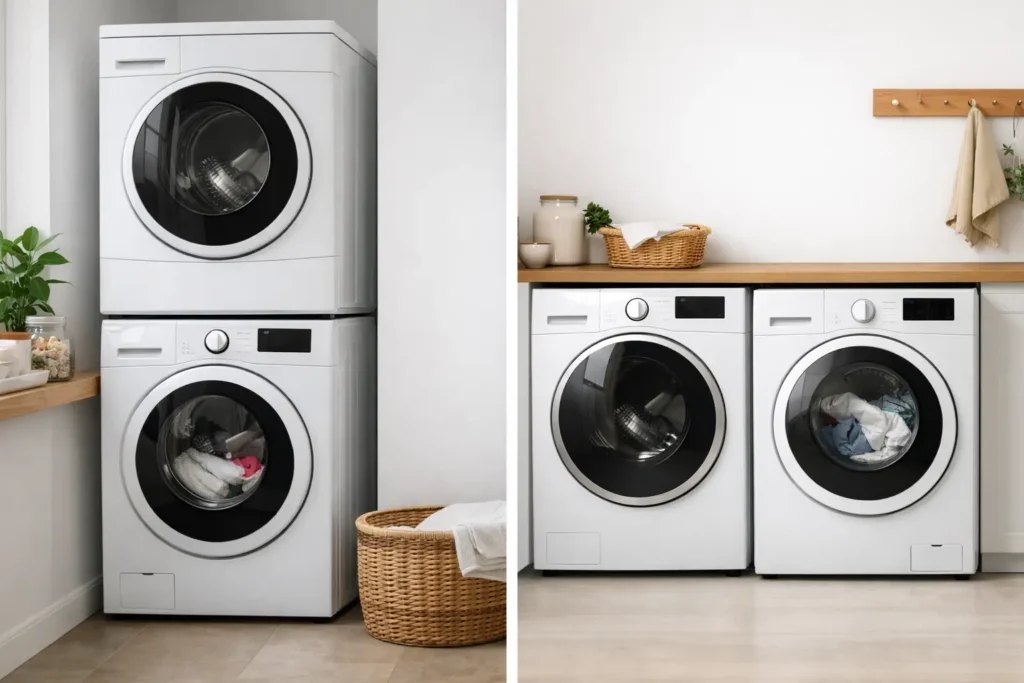
Stacked washer dryer vs separate machines is one of the most common decisions facing laundromat owners, hotel managers, and on-premise laundry (OPL) operators when planning a new facility or upgrading existing equipment. The choice affects floor space, throughput, maintenance costs, and long-term return on investment. This guide breaks down how each configuration performs in real-world commercial settings so you can choose the layout that best fits your capacity needs and budget.
What Is a Stacked Washer Dryer?
A stacked washer dryer places the dryer directly on top of the washer in a single vertical footprint. In commercial environments, these units are popular where floor space is limited, such as apartment buildings, small laundromats, fitness centers, and boutique hotels. Because the two machines share a single column, operators can roughly double the number of laundry stations in the same square footage compared with a side-by-side arrangement.
What Are Separate Machines?
Separate machines are standalone washers and dryers installed side by side or in dedicated rows. This is the traditional layout for high-volume laundromats, industrial laundries, and large hospitality operations. Separate units typically offer larger individual capacities, faster cycle times, and easier servicing, since technicians can access each machine independently without dismantling a stacked column.
Space and Capacity Comparison
When weighing a stacked washer dryer vs separate machines, floor space is usually the deciding factor. Stacked units shine in tight footprints, letting you fit more wash-dry stations along a single wall. Separate machines, by contrast, demand more floor area but support larger drum sizes and let washing and drying run in parallel at higher volumes. For a busy laundromat processing hundreds of loads per day, separate high-capacity machines often move linens through faster, while a compact OPL with limited space benefits more from the vertical efficiency of stacked units.
Cost, Maintenance, and ROI
Upfront cost per station tends to be lower for stacked washer dryer units, but separate machines can deliver better long-term ROI in high-throughput settings because of their durability and faster cycles. Maintenance is another key consideration: a technician can service a standalone dryer without disturbing the washer, whereas a fault in a stacked column may take both machines offline at once. Operators focused on maximizing uptime often prefer separate machines, while those optimizing for space and lower initial investment lean toward stacked configurations.
Which Should You Choose?
Choose stacked washer dryer units if your priority is saving floor space, serving low-to-moderate volumes, or fitting equipment into compact rooms such as apartment laundries, gyms, or small hotels. Choose separate machines if you run a high-volume operation that needs maximum throughput, larger load capacities, and the flexibility to service each unit independently. Many facilities ultimately use a mix, deploying stacked units in tight corners and separate machines in their main processing area.
Final Thoughts
There is no universally correct answer in the stacked washer dryer vs separate machines debate. The right configuration depends on your available space, daily laundry volume, maintenance preferences, and budget. By matching the layout to your operational priorities, you can improve capacity, protect uptime, and get the strongest return on your laundry equipment investment. If you need help sizing the right setup for your facility, Abelco can advise on the best commercial laundry configuration for your needs.
Key Factors to Evaluate Before Deciding
Before committing to either layout, walk through a few practical questions. How much daily laundry volume do you realistically process, and is it likely to grow? How much usable floor space and ceiling height does your laundry room provide, since stacked units need vertical clearance? What are your utility connections for water, drainage, gas, and electricity, and can they support larger separate machines? How important is continuous uptime, and can your operation absorb downtime if a single column goes offline? Finally, what is your total budget, including installation, ventilation, and ongoing maintenance? Answering these honestly will point you toward the configuration that protects both your service quality and your bottom line.
Making Your Final Decision
Ultimately, the stacked washer dryer vs separate machines question is about matching equipment to your space and volume. If you want a deeper look at compact vertical units, see our guide to commercial stacked washer dryer units, and browse the full range of commercial laundry equipment from Abelco to compare options side by side. For independent background on appliance efficiency standards, the U.S. Department of Energy offers useful reference material. Weighing stacked washer dryer vs separate machines against these factors will help you invest with confidence.