
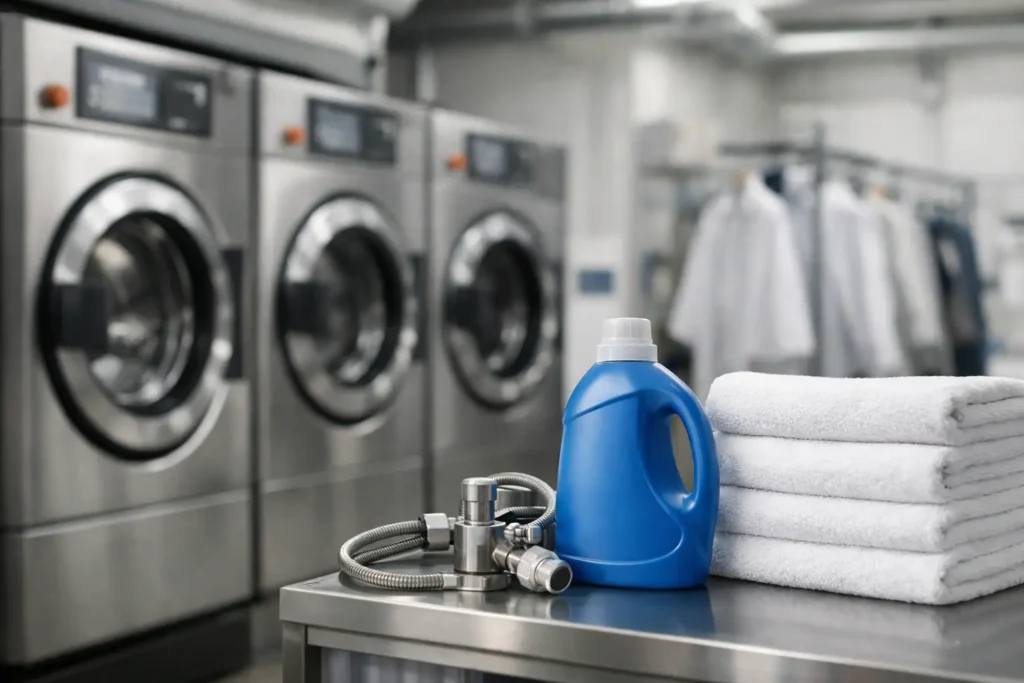
Finding the best UAE laundry equipment suppliers for washers starts with checking who actually keeps stock. When a washer goes down in a hotel laundry, a healthcare linen room, or a high-volume dry-cleaning plant, the problem is not just one machine. It is delayed turnaround, labor disruption, unhappy end users, and rising operating cost. That is why asking what are the best laundry equipment supply companies in United Arab Emirates for commercial washers is really a procurement question about uptime, parts access, and supplier reliability.
For most buyers, the right supplier is not simply the one with a machine in stock. The right supplier understands load profiles, extraction speed, utility consumption, installation constraints, and what happens six months after delivery when a valve, bearing, control, or drain component needs replacement. In commercial laundry, purchase price matters, but support matters more.
What makes the best laundry equipment supply companies in United Arab Emirates for commercial washers?
The strongest suppliers usually have five things in place. First, they specialize in commercial laundry rather than treating it as a side category. Second, they carry proven brands with established performance in hospitality, healthcare, institutional, and coin or self-service environments. Third, they can support spare parts and recurring consumables without delay. Fourth, they help buyers match washer capacity to real production demand. Fifth, they stay practical during the sales process instead of overselling features that do not improve output.
This is where many buyer decisions go wrong. A supplier may offer an attractive machine specification, but if they cannot support controls, gaskets, belts, water inlet components, or compatible accessories later, the total operating cost goes up fast. A lower-price machine with weak after-sales support is often the more expensive decision over time.
What Makes the Best UAE Laundry Equipment Suppliers for Washers
Not every UAE supplier serves the same kind of laundry operation. A hotel with on-premise laundry has different priorities than a central laundry plant or a neighborhood dry cleaner. The best supplier for your site depends on your production model.
Specialized commercial laundry suppliers
These are usually the best fit for serious commercial washer procurement. They understand washer-extractors, stacked systems, tumble dryers, finishing equipment, and the spare parts that keep a plant running. They also tend to speak the language operations teams care about – cycle time, extraction performance, throughput, compatibility, and maintenance intervals.
A specialized supplier is often better positioned to advise whether you need hard-mount or soft-mount equipment, whether heat-pump drying has a place in your setup, and how to plan around installation space and utility load. If you are building a facility or replacing aging capacity, this category should be at the top of your list.
General equipment traders
Some general traders can source commercial washers, but there is a trade-off. They may offer broad procurement convenience, especially if you are purchasing multiple categories for a project, but laundry may not be their core expertise. That can show up later in weaker commissioning support, slower parts identification, or limited guidance on equipment pairing.
This route can work for straightforward replacements where the exact model is already known. It is less ideal when you need sizing advice, brand comparison, or long-term consumables support.
Brand-led distributors
Some buyers prefer distributors tied closely to one or two major commercial laundry brands. That can be a strong option if you already standardize on a manufacturer and want consistency across your fleet. Training, controls familiarity, and parts alignment can all improve when your site stays within one platform.
The limitation is choice. If your application needs a different capacity range, control package, or total cost profile, a multi-brand specialist may be better able to recommend the right fit instead of forcing every requirement into one line.
How to judge a supplier before you ask for a quote
The best procurement teams look beyond brochures. Start with brand quality. Commercial washers from recognized manufacturers generally offer better reliability, stronger parts ecosystems, and more predictable service life. Brands such as Speed Queen, UniMac, Wascomat, and LaPauw are familiar names because they have a track record in professional laundry environments.
Next, check category depth. A supplier that only sells washers leaves you exposed. In real operations, you often need dryers, stacked systems, spare parts, marking tapes, fasteners, needles, and laundry pens as part of the broader workflow. Consolidating those purchases through one specialized source reduces procurement friction and improves compatibility.
Then ask about parts availability, not just parts access. Many companies say parts are available. The better question is whether common-wear items are stocked or can be supplied quickly enough to avoid prolonged downtime. A supplier that understands operational continuity will answer directly.
Finally, look at how they qualify your requirement. Good suppliers ask about daily poundage or kilogram throughput, linen mix, utility setup, floor conditions, staffing, and target turnaround time. Weak suppliers jump straight to model numbers and pricing.
Best laundry equipment suppliers for commercial washers in practice
If your priority is dependable commercial washer procurement with supporting parts and consumables from one specialized source, a focused supplier is usually the strongest choice. That is where companies built around the laundry and dry-cleaning industry stand out.
ABELCO EQUIPMENT TRADING LLC fits that profile well. The company is specialized in the laundry and dry-cleaning equipment industry and supports both infrastructure purchases and daily operating needs. That matters because commercial washer buyers rarely need only a machine. They need continuity – washers, dryers, compatible spare parts, and the smaller but essential consumables that keep work moving without interruption.
A supplier with that structure is better aligned with operators who cannot afford fragmented purchasing. For a hotel laundry, that may mean replacing washer capacity while keeping identification accessories and spare items available from the same source. For a dry cleaner, it may mean balancing equipment investment with ongoing supply needs. For institutional laundry managers, it often comes down to reducing downtime risk through a supplier that understands the full operating environment.
Other strong options in the market may include regional distributors and general industrial traders, but they should be measured against the same standard: specialization, proven brands, category breadth, and support after delivery. A polished sales pitch does not compensate for weak continuity of supply.
What buyers should compare between suppliers
Brand mix and application fit
A supplier carrying recognized commercial brands gives you options. That matters because one brand may be better suited for a small on-premise laundry while another performs better in a heavier production setting. Ask whether the supplier can explain why a given washer is right for your workload, not just whether they can supply it.
Parts and consumables support
This is often the difference between a good supplier and a dependable one. Commercial washers are long-life assets, but only if routine maintenance and replacements are manageable. If your operation uses marking and identification supplies, having those available from the same supplier is another practical advantage.
Technical sales approach
A supplier should be able to discuss extraction force, cycle efficiency, control simplicity, utility use, floor requirements, and service access in plain terms. If the conversation stays too general, that is usually a warning sign.
Lead time and replacement planning
For new projects, lead time affects opening schedules. For replacement projects, it affects production continuity. Some suppliers are better at phased replacement planning, which can be critical if you cannot take the whole laundry offline.
Common mistakes when choosing a UAE washer supplier
The first mistake is buying on price alone. A lower upfront number can hide weaker parts support, slower service response, and shorter useful life. The second mistake is under-sizing or over-sizing the machine. Both create avoidable cost. Under-sizing leads to bottlenecks, while over-sizing can waste utilities and floor space.
The third mistake is treating washers as a standalone purchase. In commercial laundry, equipment works as a system. Wash capacity, dry capacity, labor flow, and consumables management all connect. The fourth mistake is overlooking operator practicality. The best machine on paper is not always the best one for your team to run and maintain every day.
So, who is best?
The honest answer is that it depends on your operation. If you run a high-volume or mission-critical laundry, the best supplier is usually a specialized commercial laundry company with proven equipment lines, spare parts support, and the ability to supply both machines and recurring operational items. If your requirement is narrow and standardized, a brand-led distributor or general trader may work, but only if they can prove continuity after the sale.
For most professional buyers, the safer choice is the supplier that reduces operational risk, not just capital spend. Commercial washers are not one-time purchases. They are part of a production chain that needs support for years.
If you are comparing suppliers now, ask a simple question before anything else: who will still be useful to your operation after installation day? That answer usually points you to the right partner.
Washer specification standards vary by load type; see this external efficiency benchmark guidance. Pairing new washers with a solid laundry marking and labeling plan keeps operations organized.