
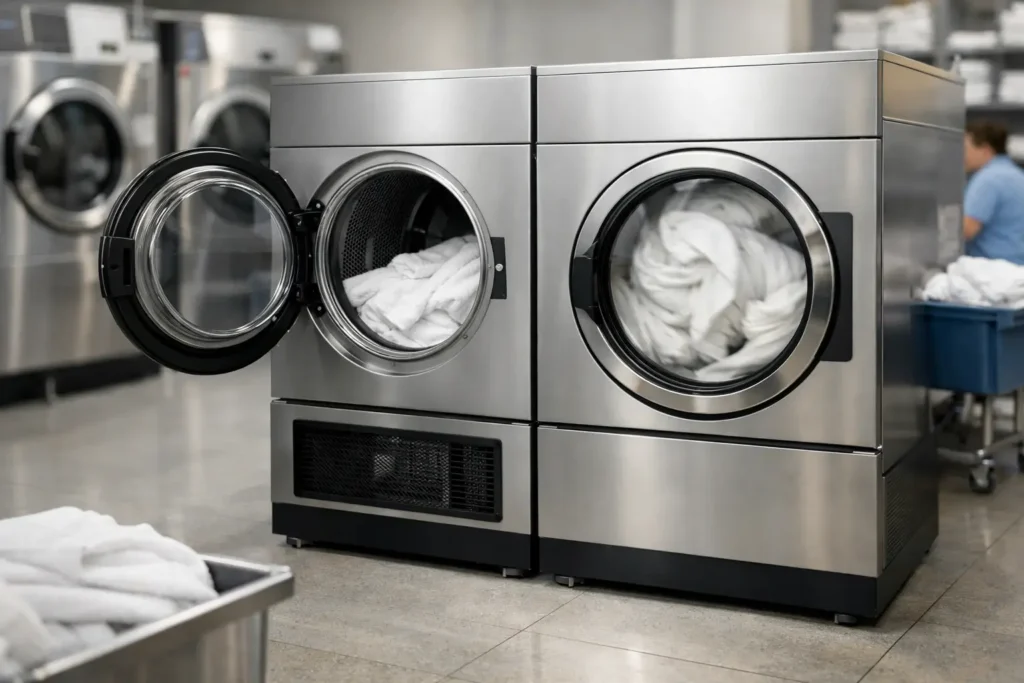
A heat pump dryer for commercial laundry is one of the most efficient ways to manage high-volume drying in hotels, hospitals, gyms, and laundromats. Instead of venting hot, moist air outside, these units capture and recycle heat through a refrigerant cycle, which lowers energy use and reduces strain on fabrics compared with conventional gas or electric dryers.
How a Heat Pump Dryer Works
Warm, damp air from the drum passes over a cold evaporator coil, where moisture condenses into water. The same air is then reheated by a compressor and condenser before it returns to the drum. Because the cycle runs in a closed loop, a heat pump dryer for commercial laundry rarely needs an external vent, giving facility managers more flexibility when planning the layout of a utility room.
Key Benefits for Commercial Laundry Operations
Facilities that switch to a heat pump dryer for commercial laundry typically see lower utility bills, since the system reuses heat instead of generating it from scratch every cycle. The lower drying temperature is gentler on linens, towels, and uniforms, which extends the useful life of textiles that would otherwise wear out from repeated high-heat cycles. Because outside venting is optional rather than required, these dryers can be installed in interior rooms where running ductwork would otherwise be difficult, and they release less ambient heat into the laundry room, keeping working conditions more comfortable for staff during long shifts.
What to Check Before You Buy
Capacity and cycle time matter more in a commercial setting than in a home laundry room, so match drum size and throughput to daily volume rather than choosing on price alone. Ask about maintenance requirements too, since the condenser and lint filters on a heat pump dryer need regular cleaning to keep the refrigerant cycle running efficiently. Most models still need a small condensate drain even without an exhaust vent, so confirm plumbing access before installation. Finally, weigh the higher upfront cost against long-term energy savings; in busy operations, the payback period is often shorter than buyers expect.
Heat Pump Dryers vs Traditional Gas Dryers
Gas dryers generally finish a load faster and cost less upfront, which is why many older laundries still rely on them. A heat pump dryer for commercial laundry trades some of that speed for lower running costs, quieter operation, and less heat and humidity released into the building. For operations focused on long-term operating costs and fabric care rather than the fastest possible cycle time, the heat pump option is usually the better fit.
If you are comparing options for your facility, Abelco’s range of commercial tumble dryers includes both heat pump and conventional models suited to different laundry volumes. For general background on efficiency ratings, the U.S. Department of Energy’s guide to high-efficiency clothes dryers is also a useful reference when comparing running costs.
Energy Savings You Can Expect
The exact savings from a heat pump dryer for commercial laundry depend on local energy rates and how many cycles a facility runs each day, but many operators report meaningfully lower electricity costs once the equipment replaces older vented dryers. Because the unit reuses heat instead of drawing in fresh air and reheating it from ambient temperature every cycle, the compressor does less
overall work per load. Over a full year, that difference adds up, particularly in facilities that run dryers nearly around the clock, such as hotels and healthcare laundries. Pairing a heat pump dryer with proper load sizing and routine filter cleaning helps operators get closer to the manufacturer’s rated efficiency figures rather than falling short of them due to lint buildup or overloading.