
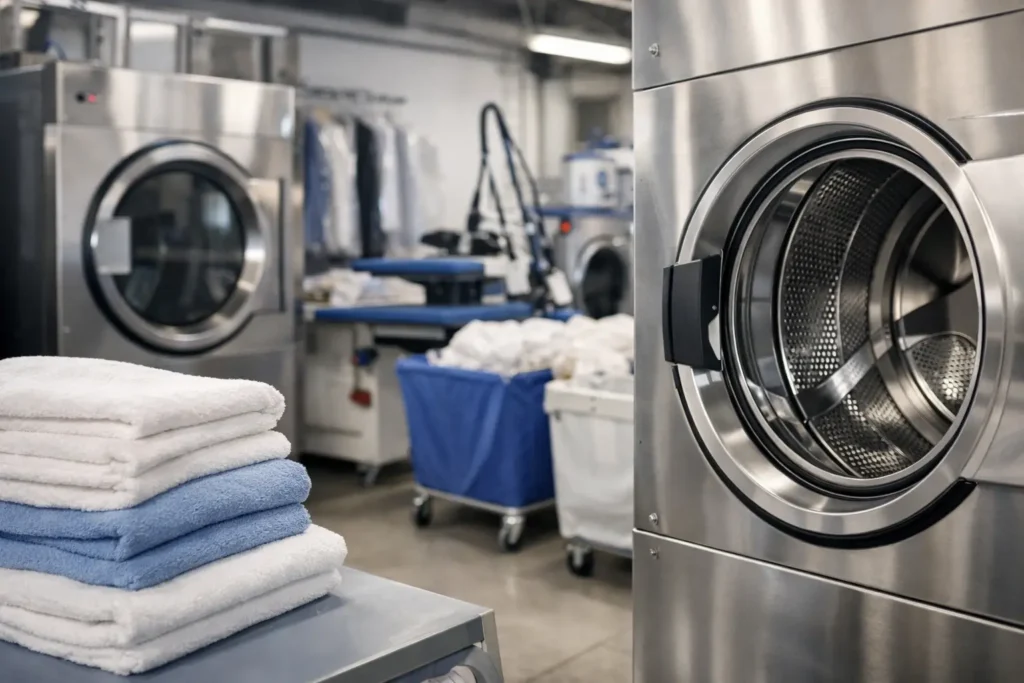
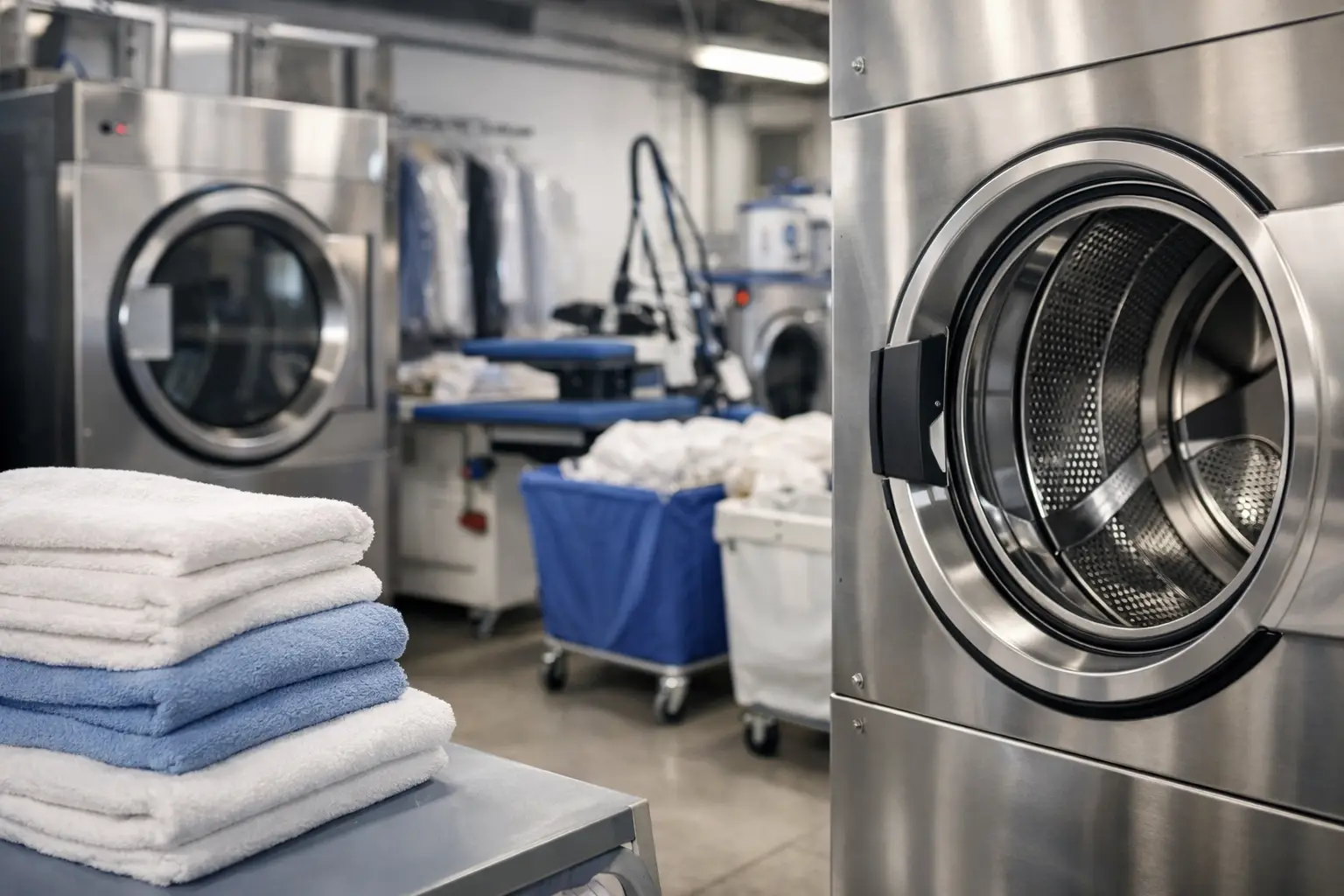
If you are asking what are the equipment used in laundry service, the real answer depends on your operation, your linen mix, and how much downtime your team can afford. A neighborhood laundromat, a hotel laundry room, and a healthcare linen plant do not buy the same way. But they do share one requirement: equipment has to perform consistently, fit the workflow, and stay serviceable over time.
For commercial operators, laundry equipment is not just a machine list. It is a production system. Wash capacity, extraction speed, drying efficiency, finishing quality, and spare-parts availability all affect labor, utility costs, turnaround time, and customer satisfaction. That is why procurement decisions should start with function first, then move to brand, size, and support.
What Equipment Are Used in Laundry Service Operations
In most professional laundry environments, the core equipment starts with washers or washer-extractors, then moves to tumble dryers, and in many cases includes stacked washer/dryer systems where floor space is limited. Beyond the major machines, reliable laundry service also depends on finishing equipment, sorting and transport tools, and the smaller consumables and spare parts that keep daily production moving.
The exact mix changes by facility type. A dry cleaner may need different finishing tools than a hotel laundry. A self-service laundromat may prioritize machine count and payment integration, while an on-premise laundry in a hospital may care more about hygiene control, throughput, and machine durability under heavy cycles.
Washers and washer-extractors
This is the starting point of any laundry operation. Commercial washers are built for higher cycle volumes, heavier loads, and more consistent wash quality than residential units. In professional settings, washer-extractors are especially common because they wash and spin at high extraction speeds, removing more water before drying.
That higher extraction matters. It cuts dryer time, reduces energy use, and improves throughput across the line. For an operator managing peak demand, that can mean getting more loads out of the same floor space.
Capacity selection is where many buyers either save money or create a bottleneck. Buying too small can slow the operation every day. Buying too large can waste water, power, and labor if load sizes stay inconsistent. The right answer depends on average daily volume, peak-hour load patterns, and the type of goods being processed, from garments to towels to flat linens.
Tumble dryers
Tumble dryers are the second major category in commercial laundry service. Their job is not just to dry loads, but to do it evenly, efficiently, and without creating a bottleneck after the wash stage. In a poorly matched setup, the washers finish faster than the dryers can handle, and production stalls.
Commercial dryers are selected by drum capacity, heat source, cycle control, airflow performance, and serviceability. Operators also need to consider the fabric mix. Heavy towels, sheets, uniforms, and delicate garments do not always behave the same in drying.
For some facilities, heat-pump dryers are worth serious consideration. They can reduce energy consumption and may support operations where ventilation or utility costs are a major concern. The trade-off is that the best fit depends on site conditions, volume, and payback expectations. A lower operating cost can be attractive, but only if the machine aligns with throughput requirements.
Stacked washer and dryer systems
When square footage is tight, stacked systems can make operational sense. They are especially relevant in laundromats, multifamily laundry rooms, and smaller on-premise installations where output still matters but floor area is limited.
The advantage is obvious: more capacity per square foot. The trade-off is access, layout flexibility, and in some cases service planning. Buyers should think beyond installation day. Ask how quickly a unit can be maintained, whether controls are user-friendly for staff or customers, and whether replacement parts are easy to source.
The equipment behind flow, finishing, and presentation (What Equipment Are Used in Laundry Service)
A laundry service does not end when the dryer stops. Finished goods still need to be presented, identified, transported, and prepared for delivery or return to use. That is where secondary equipment becomes essential.
Ironing and finishing equipment
For operations handling linens, uniforms, or customer garments, finishing quality matters. Depending on the service model, this may involve flatwork ironing equipment, steam irons, presses, or simple finishing stations.
Hospitality laundries often need smooth sheets and table linens. Dry cleaners may need more garment-specific finishing tools. Uniform programs may require pressing that supports a neat, repeatable appearance. The right equipment depends on the product leaving your plant and the standard your customer expects.
Skipping proper finishing equipment may lower the initial investment, but it often increases labor and reduces output consistency. In many operations, that becomes more expensive over time.
Carts, tables, and sorting stations
These are easy to overlook, but they directly affect productivity. Linen carts, garment racks, folding tables, and sorting stations help move goods cleanly and efficiently through each stage of the process.
Without proper handling equipment, labor time goes up and workflow gets messy. Staff start using machines as holding space, clean and soiled goods may cross paths, and turnaround slows. For busy facilities, material handling is not optional. It is part of production control.
Shelving, storage, and staging equipment
Storage systems help separate soiled items, clean processed goods, customer orders, and consumable stock. In a commercial environment, organized staging reduces errors and speeds dispatch.
This matters even more if your operation handles multiple customer accounts or item categories. Clear storage and staging also support inventory visibility, which helps managers reorder before shortages become a production issue.
The parts and consumables that keep laundry service running
When operators think about what equipment are used in laundry service, they often focus on the headline machines. But uptime is usually won or lost on the supporting items.
Spare parts
Belts, valves, bearings, control components, door parts, and other machine-specific spares are critical in commercial laundry. A strong machine lineup means little if replacement parts are delayed or incompatible.
This is why many experienced buyers choose suppliers that understand brand compatibility and keep recurring service items available. In real operations, the speed of parts replacement can matter as much as the machine specification itself.
Marking and identification supplies
In laundries that process customer-owned garments, uniforms, or resident items, identification is part of the operating system. Marking tapes, laundry pens, fasteners, and needles support item tracking and help reduce loss or mix-ups.
These may seem small compared to a washer-extractor, but they solve expensive problems. Misidentified garments create customer complaints, rework, and replacement costs. For healthcare, hospitality, and uniform service environments, dependable marking supplies are part of basic control.
Cleaning and maintenance accessories
Lint management tools, drain care items, and routine maintenance accessories also support machine reliability. The point is simple: a commercial laundry needs more than installed equipment. It needs the practical items that keep that equipment operating at full use.
How equipment needs change by laundry business type
A laundromat usually prioritizes machine count, ease of use, and durability under repeated public use. A hotel laundry may focus more on fast turnaround for towels and bed linen. Healthcare operations often need hygiene-driven workflows and dependable, high-volume processing. Dry cleaners may require a different balance, with less emphasis on bulk linen handling and more focus on garment finishing and identification.
That is why there is no single perfect equipment list. There is only the right setup for the service being delivered.
The best buying decisions come from looking at the full chain: how goods enter, how they are washed, how water is extracted, how quickly they dry, how they are finished, and how they are tracked and staged. If one stage is underbuilt, the whole operation feels it.
In short, what equipment are used in laundry service comes down to washers, dryers, finishing tools, and the consumables that keep them running.
Choosing laundry equipment with uptime in mind
Price matters, but in commercial laundry, downtime usually costs more than a higher upfront purchase. A cheaper machine that sits waiting for parts can disrupt production, labor scheduling, and customer commitments.
That is why serious operators look for proven commercial brands, practical machine configurations, and a supplier that can support both infrastructure and day-to-day needs. Abelco Equipment Trading LLC works in that specialized space, helping laundry and dry-cleaning operators source professional equipment along with the consumables and spare parts that keep production moving.
A good supplier relationship reduces procurement complexity. Instead of chasing machines from one source and essential accessories from another, buyers can streamline replenishment and improve continuity.
If you are planning a new site, replacing aging machines, or correcting a capacity problem, start with the workflow, not the brochure. Look at volume, fabric type, space, utilities, staffing, and maintenance reality. The right equipment mix is the one that keeps your operation moving without unnecessary friction – and that is where real laundry performance starts.
For facility planning standards, see this external OSHA laundry facility guidance.