
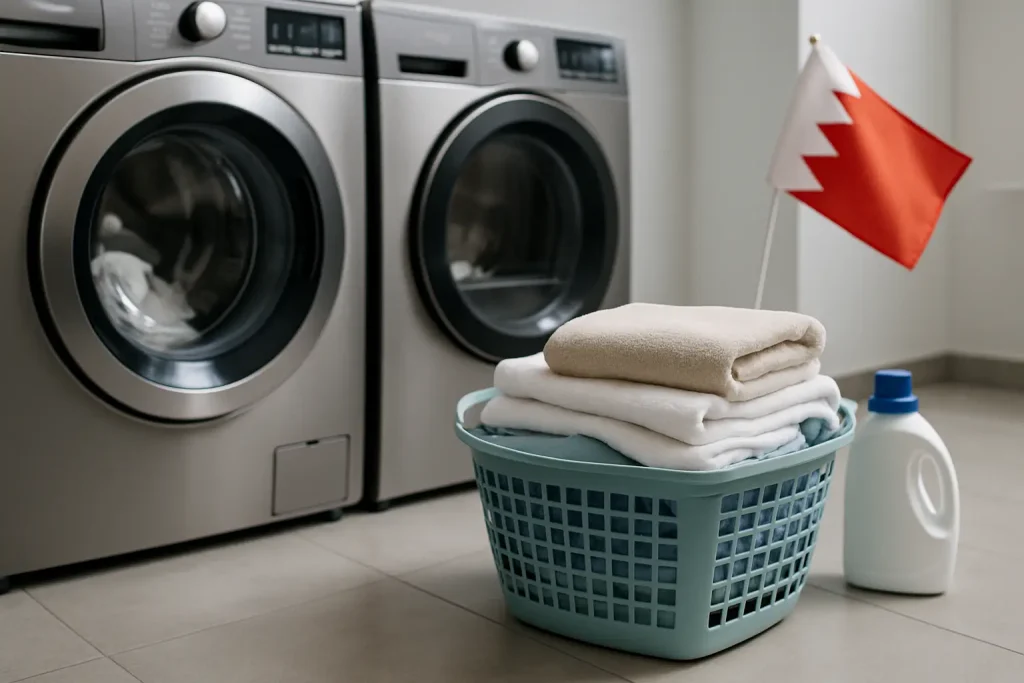
A hotel laundry room in Bahrain doesn’t fail all at once. It slows down first – one dryer takes longer to hit temp, a washer starts tripping on imbalance, finishing backs up, and suddenly your team is spending the shift catching up instead of producing.
If you’re sourcing laundry equipments bahrain for a new site, an expansion, or a replacement plan, the smartest purchases are the ones that protect uptime. That usually means choosing commercial platforms that your team can run hard, service without drama, and keep supplied with compatible parts and day-to-day consumables.
Laundry equipments Bahrain: start with your throughput, not the catalog
Buyers often start by comparing machine specs. Operators should start by mapping the flow: soil sort – wash – extract – dry – finish – pack. Your constraints in Bahrain typically show up in three places: peak-hour volume, staffing, and utility realities.
If you’re a small OPL (on-premise laundry) handling steady daily loads, reliability and ease of training often matter more than chasing the highest G-force or the newest interface. If you’re running heavier swings (hospitality, staff accommodation, high-turn linen), you’ll want capacity that handles spikes without running the plant past safe duty cycles.
Here’s the practical point: the “right” equipment list changes if your bottleneck is drying versus washing. Many laundries overbuy washers and under-buy dryers, then wonder why carts pile up wet at 6 pm.
Commercial washers vs washer-extractors: what changes operationally
A basic commercial washer can be a good fit where loads are lighter, chemical programs are simple, and you’re prioritizing straightforward operation. The trade-off is that your downstream process may carry more moisture into drying, which increases dry time and energy spend.
Washer-extractors are the workhorses in higher-throughput environments because extraction performance reduces moisture retention. That creates real downstream wins: shorter dry cycles, less lint loading, and faster turnover of carts. The flip side is that higher-performance extraction puts more emphasis on correct installation, leveling, and disciplined loading. If your team routinely underloads or overloads, you’ll see imbalance faults, vibration, and premature wear.
If you’re deciding between a slightly larger washer and a faster-extracting platform, it often depends on your dryer capacity. Strong extraction can act like “free capacity” on the drying side.
Tumble dryers vs heat-pump dryers: what you gain, what you give up
Tumble dryers are still the default in many commercial plants for a reason: they’re familiar, they’re fast, and they’re easy to service when you have the right parts and a clean preventive routine. In hospitality or multi-family applications where speed matters, that simplicity is valuable.
Industrial heat-pump dryers are worth considering when energy use is a priority or where venting constraints complicate installation. They can reduce energy consumption and can be gentler on textiles in certain programs. The trade-off is cycle time and complexity. If your operation is already tight on turnaround, a longer dry cycle can become a real cost, even if the energy number looks better.
In Bahrain, the best choice is rarely ideological. It’s about what your site can support: venting, electrical capacity, operator habits, and the reality of how fast linen needs to come out finished.
Stacked washer/dryer systems: when space is the real constraint
Stacked systems make sense when you need more turns per square foot and you’re operating in a smaller footprint: staff housing, smaller OPL rooms, and certain retail laundry formats.
The operational benefit is obvious – you add drying capacity without adding a whole new row of equipment. The trade-off is flexibility. If one side goes down, your planning options shrink. You also need to think about ergonomics and daily cleaning access. If lint screens and ducts aren’t cleaned consistently, stacked systems can quietly become your maintenance headache.
If you have the space, separate units often simplify workflow and maintenance. If you don’t have the space, stacks can be the difference between meeting demand and constantly deferring loads.
The commercial brands buyers ask for (and why)
In procurement conversations, brand preference is usually code for three operational questions: will it last, can we service it, and can we keep it running with available parts.
Commercial lines from Speed Queen, UniMac, Wascomat, and LaPauw show up often because they’re purpose-built for duty cycles that would punish light-duty machines. What matters more than the logo is choosing the right platform within the brand for your load profile. A great machine sized wrong for your average load or your peak shift will still disappoint.
Also consider standardization. Running fewer models across your site reduces spare-parts variety, simplifies training, and makes troubleshooting faster. It’s not glamorous, but it’s a real uptime strategy.
Don’t ignore the “small stuff”: consumables that protect production
Most downtime doesn’t start with a catastrophic failure. It starts with small process breakdowns: lost garment identification, mis-sorts, rewash, and finish-room confusion. That’s why professional laundries keep consumables tight and consistent.
Marking tapes, fasteners, needles, and laundry pens aren’t accessories in the casual sense – they’re operational controls. When identification is clean and consistent, you reduce rework, reduce disputes, and keep line flow moving. If you’re running a uniform program or managing guest-laundry items, this becomes even more important.
The trade-off is simple: it takes discipline to standardize how marking is done and to keep the right supplies on-hand. But it’s cheaper than rewash, and it’s far cheaper than losing customer trust.
Spare parts planning: the difference between a “repair” and a shutdown
If your parts plan is “we’ll order it when it breaks,” you’ve already chosen downtime.
A basic spares strategy for commercial laundry equipment is to identify what fails in normal wear cycles and stock the items that stop production when they’re missing. Belts, seals, door components, sensors, and ignition-related items are typical examples, but what you should stock depends on your exact machine set and how heavily you run it.
Two practical realities matter here:
First, compatibility is everything. The wrong part that “almost fits” costs you time twice – once when you try it, and again when you reorder.
Second, lead time is part of the cost. Even if a part isn’t expensive, waiting for it can be.
If you’re operating multiple sites, it can make sense to centralize spares and set a minimum stock level. If you’re a single site, keep a smaller kit but make sure it’s complete for your most common stoppages.
A simple way to right-size your equipment mix
If you want a pragmatic approach without overengineering it, start with three numbers: average daily pounds (or kilograms), peak-day volume, and required turnaround time.
Then sanity-check your plant balance. If washers can process more than dryers can handle, you’ll build a wet backlog. If dryers outpace washers, you’ll waste energy and floor space on idle capacity. If finishing can’t keep up, you’ll end up storing clean-but-unfinished loads and losing the speed advantage you paid for.
This is where “it depends” is real. A healthcare linen flow can justify different extraction and temperature priorities than hospitality. A retail laundry may care more about versatility and fast cycle changes than about a single optimized program.
What to ask before you buy laundry equipment for Bahrain operations
When you’re evaluating suppliers and machine options, keep your questions operational and specific.
Ask what the recommended preventive maintenance schedule looks like in real shifts, not just in a manual. Ask how parts are identified for your exact models and what the common wear items are. Ask about installation requirements that affect performance – leveling, venting, drainage, electrical, and water quality considerations.
And ask about continuity. The best supplier relationship is the one that stays useful after the invoice – when you need a replacement part, another set of marking supplies, or a second machine to match what you already run.
For commercial operators who want one specialized source for professional laundry machines plus the recurring accessories and spare parts that keep production moving, ABELCO EQUIPMENT TRADING LLC is built for that role – you can see the equipment categories and operational supplies at https://Www.abelco.me.
The purchasing mindset that saves the most money
The lowest purchase price is rarely the lowest cost.
What saves money in commercial laundry is staying productive: predictable cycle times, fewer rewash events, fewer “mystery issues,” and fewer days where a single failed component takes out a whole process step. When you buy with uptime in mind, you naturally prioritize durable platforms, serviceable designs, and a parts-and-consumables plan that matches how your facility actually runs.
Buy the equipment your team can keep running, and you’ll feel the difference every week – not just on day one.
For efficiency benchmarks, see this external efficiency guidance.