
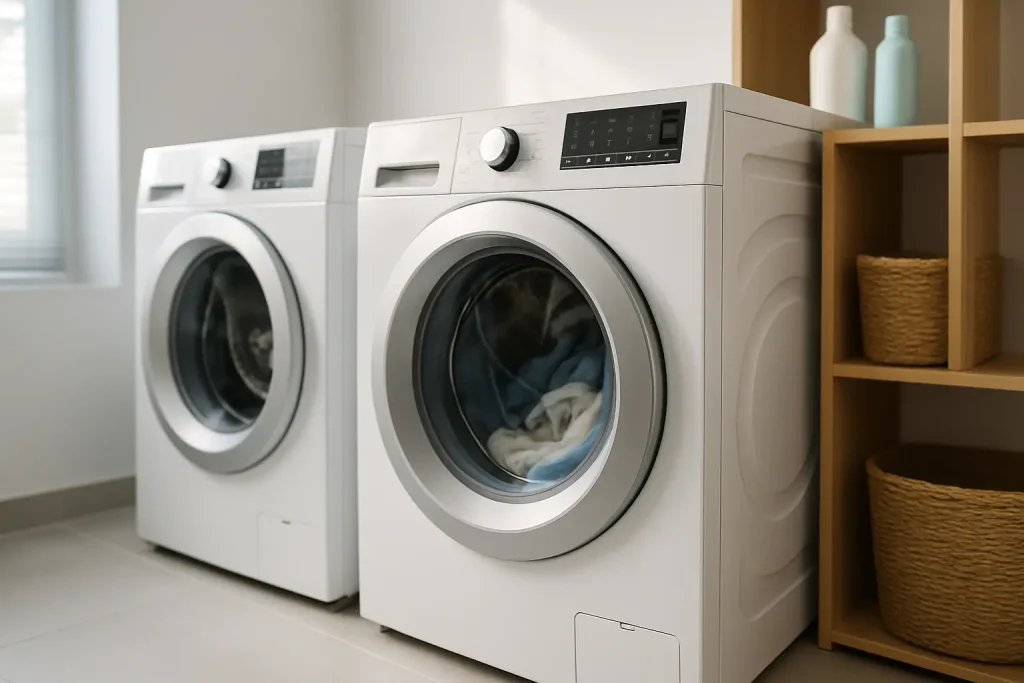
Sourcing laundry machines in Dubai looks straightforward on paper. The pound targets, washer sizes, and dryer BTUs all look familiar. The same setup still behaves differently once a laundry room runs at full load. Heat, humidity swings, sand, lint, and hard-water scale all push equipment hard. Nonstop turnover in hospitality and residential towers does the same.
If you’re sourcing laundry machines in Dubai, think like an operator first. Ask what keeps uptime high. Identify what keeps rewash low. Make sure parts and consumables are easy to replenish.
What makes laundry machines in Dubai different
Specifying laundry machines in Dubai is not “harder” than in other markets in every way. It’s just specific. The environment and operating patterns tend to punish weak points quickly.
Heat and long daily run hours expose cooling and airflow shortcomings. When dryer ventilation, lint management, or mechanical clearance isn’t right, problems show up fast. Expect longer dry times, hotter components, and more nuisance stoppages.
Water conditions matter more than most buyers expect. Scale buildup hits heating elements, valves, and level sensors. If your workflow includes hot washes, the maintenance schedule you can ignore elsewhere becomes non-negotiable.
Then there’s demand profile. Hotels, staff housing, gyms, salons, and dense residential buildings can swing from quiet to overloaded in a single day. You don’t just need capacity. You need equipment that stays consistent across peak loads.
Start with throughput, not laundry machine count
A common mistake when sourcing laundry machines in Dubai is buying “enough machines” instead of buying enough finished pounds per hour.
Throughput combines wash cycle time, extraction performance, and dry time. It also depends on how reliably operators keep the line moving. Two laundries can have the same number of machines and totally different output. One set may extract better (less moisture into the dryer). Another may have dryer controls and airflow tuned for repeatable drying.
When you evaluate laundry machines in Dubai, ask two things. What is the realistic cycle time at your chemistry and soil level? What happens when incoming loads spike? If your wash room finishes faster than your dry room, carts pile up. Operators then start “overloading to catch up.” That’s when rewash rises and garments come out inconsistent.
Washer-extractors vs standard commercial laundry machines
For most commercial operations, a washer-extractor is the workhorse decision.
Washer-extractors win when you care about water control, extraction G-force, and repeatability. Higher extraction reduces remaining moisture, which shortens dry time and reduces energy per pound. That matters in Dubai where dryers can become the bottleneck.
Standard commercial washers can suit lighter-duty sites or tight budgets. The trade-off is slower finishing, higher utility cost, or more operator intervention. The trade-off is not just performance. It’s also how easy it is to keep quality consistent when staffing changes.
For mixed goods (towels, sheets, uniforms, delicate items), prioritize flexible programming. Also look for predictable water levels. You’re buying fewer surprises, not just a machine.
Tumble dryers: where most “mystery downtime” starts
Among laundry machines in Dubai, dryers are straightforward until they aren’t. In Dubai, the dryer room often exposes the weakest planning.
A tumble dryer’s real performance depends on airflow, vent routing, lint containment, and heat control. Long vent runs, tight bends, or undersized ducts cause longer dry times. They also raise component stress. If your site is in a tower or has limited exhaust options, treat that as a core equipment criterion. It should not be an afterthought.
This is also where maintenance discipline matters. Lint management isn’t cosmetic. Poor lint control can trigger overheating, inconsistent drying, and premature part wear. High-volume sites need equipment designed for easy daily lint removal and service access. The “small tasks” are what protect the big assets.
Stacked washer/dryer systems for space-driven sites
Stacked systems are popular in staff housing, multi-family buildings, and small commercial back-of-house rooms where square footage is the limiting factor.
The upside is obvious: capacity per square foot. The downside is also predictable. You have less flexibility when one half of the stack needs service. You can also be forced into a different load-balancing strategy. If your peak hours are intense, make sure you’re not creating a single point of failure.
Stacked units tend to perform best when you standardize loads and keep operator behavior consistent. When users vary widely (tenants vs staff vs rotating shifts), durability matters more. Pay attention to controls, doors, hinges, and coin or payment interfaces.
Heat-pump dryers: the right tool in the right places
Industrial heat-pump dryers are not a blanket replacement for conventional dryers. They are a smart fit when you need controlled drying, energy efficiency, and you can support the installation requirements.
Heat-pump drying suits sites that want lower operating cost. It also reduces heat rejection into the room and gives gentler drying for certain textiles. But the trade-off can be higher upfront cost and a stronger need for correct sizing and maintenance. For very high throughput with aggressive peak loads, the decision shifts. Check whether the heat-pump system can match your finishing pace without creating a backlog.
The practical rule for choosing laundry machines in Dubai is this: pick heat-pump dryers when the business case is based on consistent daily volume and you can plan the layout properly. Choose conventional tumble dryers when peak throughput and simplicity are the priority.
The hidden purchase: parts compatibility and recurring supplies
Buyers of laundry machines in Dubai don’t lose money because they picked the wrong brand name. They lose money because they can’t get the right part fast. Or because they keep patching problems with mismatched substitutes.
If you want production uptime, evaluate equipment with the supply chain in mind. That includes common wear parts, belts, valves, and drain components. Also door gaskets, igniters or heating elements, bearings, and control parts. Day-to-day consumables matter too. Think marking tapes, fasteners, needles, and laundry pens.
Those accessories are not “extras.” In a professional laundry, identification and repair supplies prevent sorting mistakes. They also reduce loss and keep goods circulating. When those items run out, operators improvise. Improvisation is where errors and customer complaints start.
A specialized supplier matters here because it reduces procurement friction. If you source equipment and the ongoing items through separate channels, you create more problems. Each problem then needs solving during busy weeks.
Picking laundry machines in Dubai by use case (what we see work)
Hotels and hospitality laundries usually benefit from washer-extractors with strong extraction and programmable controls. Pair them with dryers sized for real-world load behavior, not ideal conditions. Consistency beats theoretical speed.
Healthcare, clinics, and linen services often prioritize repeatable temperatures, chemical compatibility, and tight process control. They also feel downtime harder because rewash and hygiene failures are expensive. Durable components and predictable maintenance access matter.
Laundromats and self-service sites care about durability and user abuse resistance. Straightforward serviceability matters too. If a machine is down, it’s not just lost volume – it’s lost customer trust.
Multi-family and staff accommodations typically need stacked solutions or compact footprints. They still need commercial-grade durability because utilization is heavy and user training is minimal.
What to ask before you buy
Before you commit to any laundry machines in Dubai, make the conversation operational. Ask how the equipment holds up under high cycles per day. Find out which service items fail most often and what their lead times look like. Confirm what preventive maintenance is needed monthly and quarterly. Then check whether your team can realistically do it.
Also ask about installation realities. These include venting routes, gas or electrical constraints, drainage, water pressure, and floor loading. Many “machine issues” are actually site issues that show up after handover.
If you’re expanding or replacing capacity, map your bottleneck. If drying is already tight, upgrading washers alone can hurt performance. More wet goods just push into the same drying footprint.
A practical approach to sourcing laundry machines in Dubai
For fewer surprises with your laundry machines in Dubai, standardize on recognized commercial equipment lines. Then build around a supplier relationship that can support both equipment and ongoing essentials.
That’s why ABELCO EQUIPMENT TRADING LLC focuses on commercial laundry and dry-cleaning as a single-source portfolio. The range covers professional machines plus the consumables and spare parts that keep production moving. If you’re evaluating options for your site, you can review categories and request support at https://Www.abelco.me.
The point is not to overcomplicate procurement. It’s to keep your machines running and your operators working – not waiting.
Closing thought
To choose the right laundry machines in Dubai, don’t shop for specifications in isolation. Shop for a system you can keep running. Look for stable throughput, predictable maintenance, and a parts-and-supplies plan that holds up at peak demand.
For independent lab reliability data, see this external Consumer Reports testing overview.