
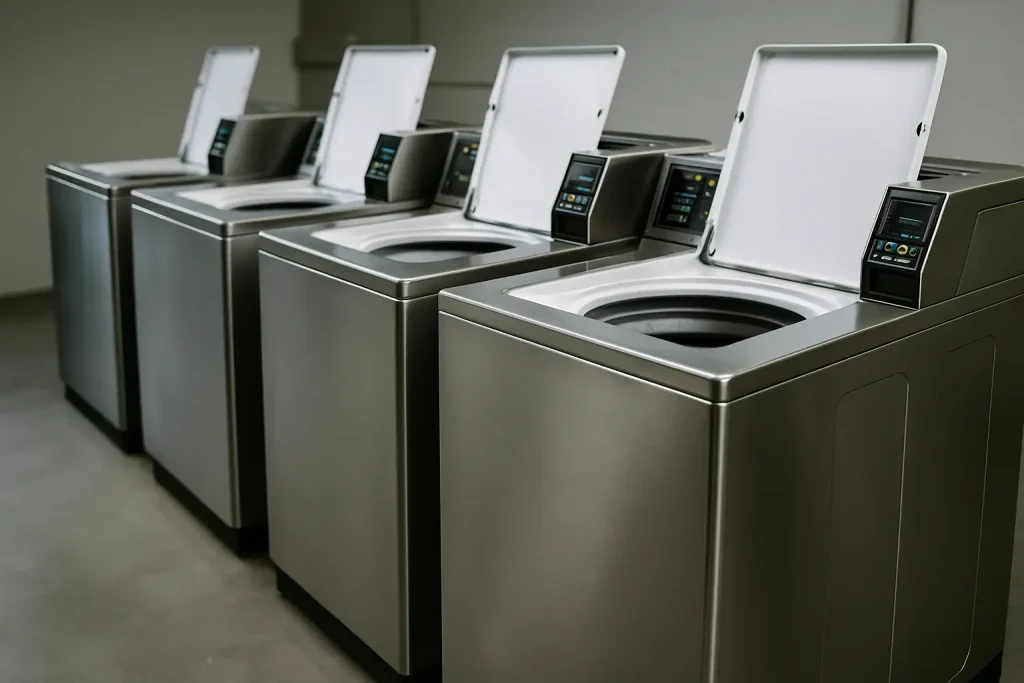
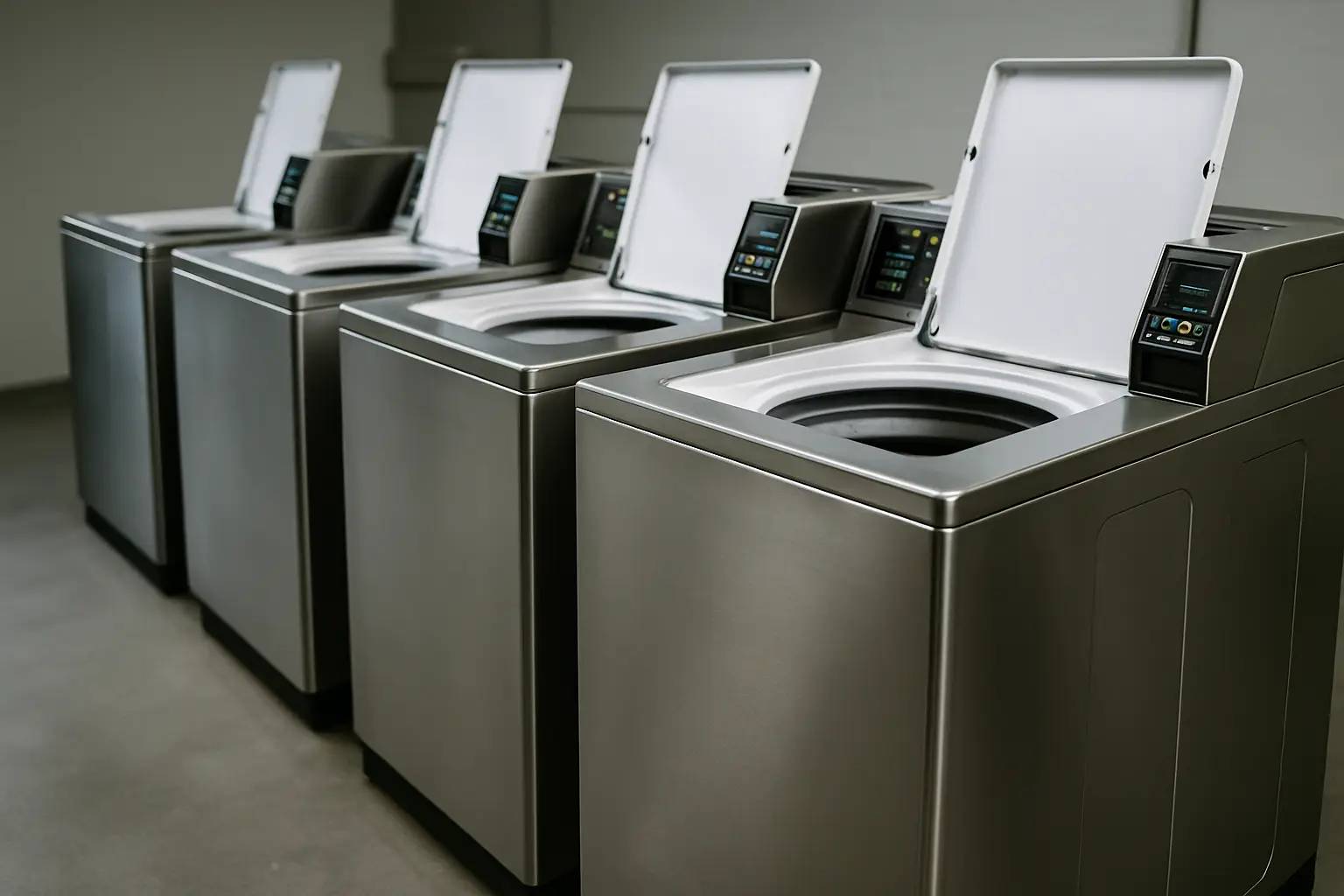
A top-load washer looks simple from the outside. In a commercial laundry, it is rarely simple. The difference between a laundry machine top load that runs for years and one that turns into a weekly headache usually comes down to two things: how it’s built for abuse, and how fast you can keep it running when something wears.
This is where operators get practical quickly. You are not buying “a washer.” You are buying uptime, predictable cycle times, and a machine your team will not baby. Top-load still has a place in professional settings – but only when the use case matches what the machine is good at.
Where a laundry machine top load makes sense
Top-load machines earn their keep in operations that want straightforward loading, quick turns, and a familiar workflow for attendants and staff. They also fit facilities that do not need high-G extract speeds or ultra-precise programming. If your business wins on speed and simplicity, top-load can be a smart piece of the mix.
Operators often deploy them in laundromats for everyday customer loads, in multi-family housing laundry rooms where users expect a familiar format, and in smaller on-premise laundries that are not pushing heavy, dense goods all day long. They can also act as reliable “utility” washers for rags, light uniforms, or general housekeeping textiles, especially when you want to keep those items out of your primary washer-extractor lineup.
The trade-off is that many top-load designs are not built for the same continuous-duty profile as a true commercial hard-mount washer-extractor. If your operation is processing high volumes of towels, sheets, and dense goods hour after hour, a top-load can become the wrong tool fast.
The real decision: duty cycle and abuse tolerance
When buyers say “commercial grade,” they usually mean three things: the machine can run all day, it can handle inconsistent loading without falling apart, and technicians can service it quickly. A laundry machine top load that is perfect for light-to-moderate traffic may struggle when it becomes your main production capacity.
Start by being honest about how your team will use the machine. Will it see 10 to 20 turns a day, or 60 to 100? Do the users overload it, slam lids, and pour in too much chemical? Are attendants given time to clean and check it, or does maintenance happen only when something fails?
If you expect constant throughput, you are typically better served by commercial washer-extractors (soft-mount or hard-mount depending on your floor and installation plan). If your goal is dependable basic washing with less complexity and a lower barrier for users, top-load can be a good fit – as long as you buy the right construction and plan for parts.
What to look for in a commercial top-load washer build
The fastest way to regret a purchase is to focus only on the purchase price. In commercial laundry, the cost you feel is downtime: out-of-order signs, refunds, angry guests, or delayed linen turns.
Pay attention to the components that take daily punishment. Suspension and drive systems matter because out-of-balance loads are normal in the real world. A strong transmission or drive setup and a durable suspension reduce vibration issues and extend the life of the machine. The lid switch and hinges also see constant use. They should be commercial-tough, not delicate.
Controls are another point where “simple” can be a feature. Many operators prefer proven, straightforward controls that staff can understand quickly and that do not become a service call every time someone changes a setting. That does not mean you should avoid programmable options – it means you should choose controls that match your team’s skill and the consistency you need.
Finally, look at the cabinet and tub materials. Corrosion resistance matters more than many people expect, especially in humid laundry rooms or locations where staff clean machines aggressively. A cleanable design is not just about appearance; it helps prevent odor complaints and reduces the chances that a machine gets neglected until it fails.
Capacity and cycle time: do the math before you buy
With top-load, operators sometimes underestimate how quickly multiple smaller machines can create labor bottlenecks. A few extra minutes per cycle does not sound like much until it repeats all day.
Think in terms of pounds per hour, not “number of washers.” If you need to process a certain volume of linens daily, calculate how many loads you can realistically complete per hour per machine, factoring in fill time, wash, drain, spin, and actual user behavior. If customers or staff routinely overload, cycle times stretch and mechanical stress rises.
This is also where you decide whether top-load is your primary production tool or a supporting role. In many professional operations, the best answer is a mix: top-load for certain categories and larger washer-extractors for core linen production.
Water, energy, and extraction: what top-load can and can’t do
Commercial buyers increasingly care about utilities, but not as an abstract goal. They care because water and energy costs hit margins directly, and because extraction affects dryer time.
Top-load machines typically do not match the extraction performance of washer-extractors designed for high-G spin. Lower extraction means wetter goods, which means longer dry times and more wear on dryers. If your dryers are already the constraint in your plant, adding top-load capacity may actually slow the entire operation.
On the other hand, for light goods or customer self-service loads where perfect extraction is not the priority, top-load can be acceptable. It depends on your throughput plan. If you are fighting dryer queues, prioritize better extraction upstream.
Installation and serviceability: the parts question is the uptime question
A commercial laundry doesn’t stop because a machine is “old.” It stops because the right part is not available, or because the machine is a service headache.
Before you commit to any laundry machine top load, confirm the service path. Who will work on it? What are the common wear items? How quickly can you get the parts that actually fail in real life – not just the parts diagram?
Consumables and small items matter here more than people like to admit. A washer down for a small component can turn into lost revenue fast. The same is true across your floor: if you cannot keep marking and identification supplies, fasteners, or basic laundry accessories in stock, you end up improvising. Improvisation costs time and quality.
This is one reason commercial operators prefer recognized lines with established parts availability and consistent model support. It reduces procurement friction and shortens downtime.
Matching the right top-load washer to your industry
Different segments stress equipment in different ways.
Laundromats need machines that tolerate unpredictable loading, coins or payment systems (where applicable), and constant start-stop traffic. Here, a dependable top-load unit can be a volume workhorse, but you still want commercial construction and a clear parts plan because the wear profile is relentless.
Hospitality and hotels typically care about fast linen turns and predictable results. If the operation is doing most linen in-house, washer-extractors often carry the main load, and top-load may serve as a utility washer for odd items or staff use.
Healthcare and linen services prioritize consistent wash parameters and infection control processes. In many cases, they rely on programmed washer-extractors and process control rather than top-load machines. If your team uses a top-load, it is usually for non-critical categories and staff should keep them clearly separated.
Multi-family and institutional laundry rooms often want simplicity and durability with minimal user training. Top-load can fit well, provided the machines are truly commercial and the operator has a plan for rapid repair.
Buying a laundry machine top load: spend where it protects production
If you are choosing a top-load machine for a commercial environment, buy it like an operator, not like a homeowner.
First, align on the role it plays: primary revenue machine, utility support, or tenant amenity. Second, choose the construction and brand support that match that role. Third, plan your parts and supplies pathway so you are not scrambling later.
A specialized supplier can help you avoid mismatches between what you need and what shows up on the floor. If you want one source that covers professional laundry equipment plus the recurring supplies and compatible parts that keep machines producing, ABELCO EQUIPMENT TRADING LLC is specialized in the laundry and dry-cleaning equipment industry and supports operators with a focused catalog at https://Www.abelco.me.
The decision that keeps paying you back
A top-load washer is never just a line item. In a working laundry, it is either a dependable producer or a quiet source of downtime. Choose a laundry machine top load that matches your duty cycle, protect your operation with a real parts plan, and you will feel the benefit every week when your floor keeps moving the way it should.