
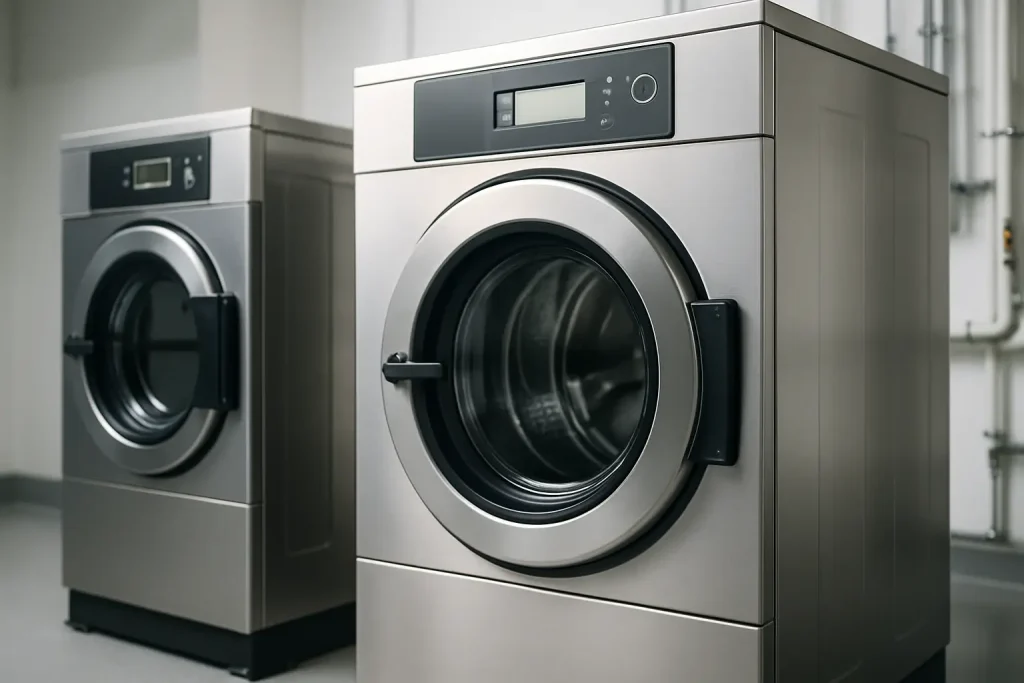
A busy laundry doesn’t “run.” It either produces consistently or it becomes a daily fire drill – rewash loads, extended dry times, complaints, and staff workarounds that slowly become your normal. That’s why UniMac laundry machines come up so often in serious procurement conversations. Operators want predictable throughput, serviceability that doesn’t depend on luck, and a platform that can be supported with parts over the long haul.
This isn’t about a brand name on the front panel. It’s about whether the machine helps you hit your production target hour after hour, and whether it can be kept online when the facility is full and the clock is not flexible.
Where UniMac laundry machines fit best
UniMac laundry machines are typically evaluated by commercial laundromats, on-premise laundry (OPL) rooms in hotels and multifamily housing, healthcare and linen service operations, and dry cleaners that do wet-cleaning or back-of-house finishing support. In these environments, the purchase decision is less about the lowest upfront number and more about the cost of disruption.
If your site has consistent volume and you care about repeatable cycle quality, UniMac tends to be shortlisted because the product line is built for commercial duty cycles. That matters when you’re scheduling labor around turns per day, not around “when the machine feels like cooperating.”
There’s also a practical procurement angle. When you standardize on a platform, training is simpler, spare parts are more predictable, and your team stops wasting time interpreting different controls and quirks across mixed equipment.
Picking the right category: washers, washer-extractors, and dryers
Commercial buyers often say “washer” when they mean “washer-extractor.” The distinction matters because it changes both output and downstream drying time.
Washers vs. washer-extractors
A light-duty commercial washer can work for lower volume and smaller sites, but a washer-extractor is usually the workhorse in professional operations. Higher extraction reduces moisture retention, which cuts dry time, saves energy, and increases dryer capacity without adding dryers. If you’re constrained on space or utilities, extraction performance becomes a hidden lever for throughput.
The trade-off is that higher-performance machines demand that installation is correct. Floor loading, anchoring, and vibration management aren’t “nice to have.” They determine whether the machine stays stable and whether bearings, seals, and suspension components live a full service life.
Tumble dryers and stacked configurations
Drying is where many operations lose time. If your dryers are consistently the bottleneck, adding washer capacity won’t fix your production line. UniMac’s dryer options are typically evaluated by heat input, airflow, and control flexibility. Strong airflow and correct venting are not optional – they’re the difference between a 35-minute dry and a 55-minute dry that everyone blames on “heavy linen.”
Stacked washer/dryer systems can make sense in tight footprints like small OPL rooms or high-rent laundromats where every square foot needs to earn. The trade-off is service access and workflow. Stacked units can complicate maintenance access and can push staff into awkward loading ergonomics if layout is not planned.
Sizing UniMac laundry machines for real throughput
The most common sizing mistake is matching machine capacity to a guess, not to a production requirement. A better way is to start with your peak-day pounds per hour (or loads per hour), then work backward.
If you run hospitality linen, for example, the “load” isn’t a constant. Terry, sheets, and mixed goods behave differently in both wash chemistry and drying. Healthcare and long-term care add another layer: you may have goods that require specific cycle profiles, higher water levels, or disinfection parameters that lengthen cycle time.
When you plan capacity, account for:
- Average cycle time plus real-world changeover time (loading, unloading, transfer)
- Whether you will stage carts properly or rely on staff to “find a cart” each time
- Dryer time based on extraction and fabric mix
- Peak day surges, not only weekly averages
It’s normal to land on a solution that looks “bigger than needed” on paper. That headroom is what keeps you from operating at the edge every day, where a single delayed pickup or one out-of-service machine creates a backlog.
Utilities and site constraints that decide the purchase
Two sites can buy the same rated capacity and have completely different results. Utilities and installation quality decide whether you get the performance you paid for.
Gas, electric, and venting considerations
Dryers are frequently under-supported by the building. Gas supply sizing, regulator quality, make-up air, and vent routing are common failure points. Long vent runs, too many elbows, or undersized ducting can silently kill dryer performance. Operators then compensate by extending dry times, which hits both energy cost and throughput.
If you’re considering electric heat, confirm electrical capacity early. Electric heat can be a valid choice in certain buildings, but it changes your utility planning and may change operating cost depending on local rates.
Water quality and chemical compatibility
Hard water, poor filtration, or inconsistent water pressure can affect wash results and component life. If water is aggressive, scale can build faster in valves and heating components. If chemicals are over-concentrated or not matched to textiles, you’ll see premature wear and customer complaints.
A practical approach is to align your machine selection with your chemical program and your maintenance routine, not treat them as separate decisions.
Controls, programmability, and operator consistency
Control flexibility matters most when you have varied goods or multiple shifts. Programmable controls can help standardize outcomes so the night shift doesn’t “reinvent” wash formulas. That consistency reduces rewash rates and protects textiles.
But there’s a trade-off. More programmability can also mean more ways for an untrained operator to select the wrong formula. The solution is simple: lock down critical programs, provide clear naming conventions, and train staff on a short list of approved cycles.
If your site has frequent turnover, lean toward controls that support consistency over endless customization.
Maintenance and uptime: what to plan for upfront
Most breakdowns aren’t mysterious. They’re predictable wear items and predictable mistakes.
UniMac laundry machines, like any commercial platform, will run best when you build a basic uptime plan. That plan should include lint management, belt and bearing inspection intervals, drain and valve checks, and a documented process for reporting abnormal noise, vibration, or temperature drift.
Dryers deserve special attention because lint is both a performance killer and a safety risk. Clean screens are not enough. Airflow is a system: lint screens, internal ducting, blower area, and vent line all matter.
Parts availability is part of uptime, too. If your operation cannot afford long downtime, you should keep critical spares on hand based on your model mix and historical wear. That is usually cheaper than expediting parts during an outage and paying for lost production.
For operators who want a single specialized supplier relationship for commercial machines plus recurring consumables and compatible spare parts, ABELCO EQUIPMENT TRADING LLC at https://Www.abelco.me is positioned for that procurement style.
New build vs. replacement: two different buying decisions
A new build lets you design for workflow. You can place washers close to soil sort, align dryers with folding tables, and position carts to reduce steps. In a replacement scenario, you’re negotiating with existing electrical capacity, gas sizing, floor drains, and physical door widths.
If you’re replacing older equipment, measure everything that can block delivery and installation. Door openings, elevator capacity, and corridor turns can become last-minute surprises. Also confirm whether your existing utility connections match the new machines’ requirements. “Close enough” is where projects get delayed.
In replacement projects, it can be smart to standardize on a model family that your staff can service and your supplier can support. That reduces the long-term cost of mixed fleets.
What a smart evaluation looks like
If you’re comparing UniMac laundry machines to other commercial lines, the decision should come down to throughput, serviceability, and support continuity – not brochure specs alone.
Ask yourself:
Will this equipment reduce my bottleneck, or just move it? If washers are fast but dryers are slow, you’ll still be waiting.
Can my building actually support the utilities and venting required? Many “equipment problems” are installation problems.
Do I have a practical plan for parts and maintenance? The best machine is the one you can keep online.
And finally, will my staff use it correctly every day? A good control system supports repeatability, not improvisation.
A helpful closing thought: if you want fewer surprise outages, treat your next machine purchase like an uptime project, not a shopping decision – the right UniMac setup is the one that matches your workload, your building, and your support plan from day one.
For independent lab reliability data, see this external Consumer Reports testing overview.