
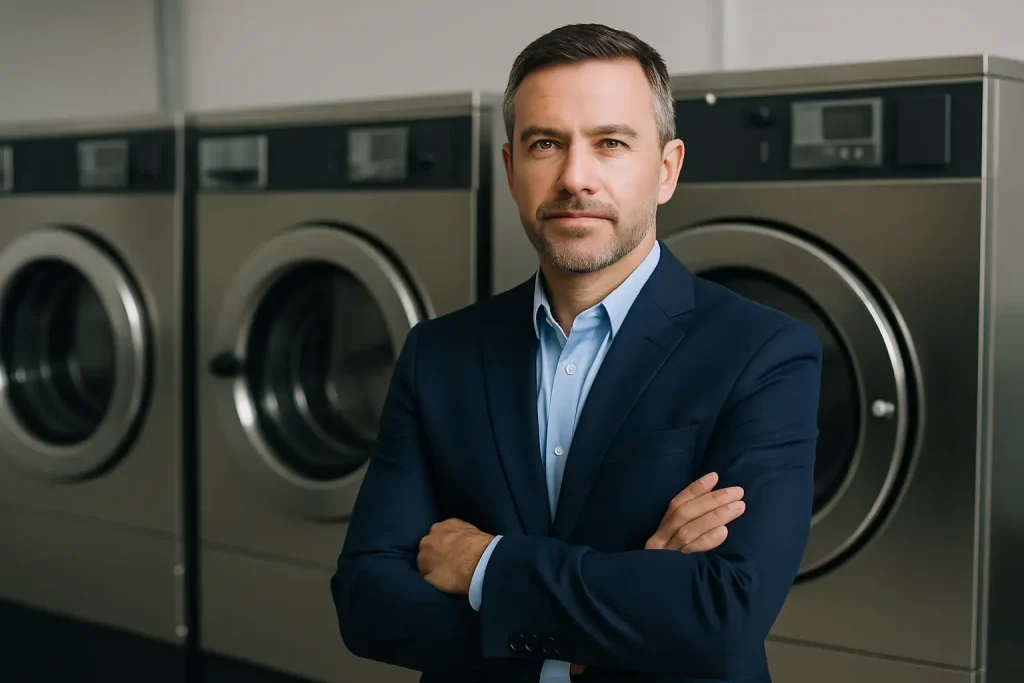
A commercial laundry only looks simple from the outside. On the floor, it is throughput math: pounds per hour, turns per shift, heat recovery, labor minutes, and how fast you can get back online when something breaks. That is why picking a laundry equipment company is less about getting a good price on a washer and more about protecting production uptime.
What a laundry equipment company should really do for you
Most operators start with machines because that is the visible capital purchase. The better question is what happens after install. A capable supplier keeps your operation producing by matching capacity to demand, making sure parts are compatible, and keeping recurring supplies available so you are not scrambling midweek.
If you run a laundromat, you feel this as customer churn when out-of-order signs stay up too long. If you manage an on-premise laundry for hospitality, multifamily, or healthcare, you feel it as linen shortages and overtime. For dry cleaners, it is the same pressure with different bottlenecks: finishing schedules, tagging accuracy, and rework.
A real laundry equipment partner understands those bottlenecks and sells accordingly.
Start with the only number that matters: required throughput
Capacity planning gets misunderstood because people shop for “bigger” instead of “right-sized.” Your baseline should be what you must produce during peak demand, not what you produced on an average Tuesday.
A practical way to think about it is: how many pounds per hour you need, and how many hours you can realistically run. High-demand environments do not fail because the washer is too small. They fail because the system is unbalanced. One oversized washer-extractor paired with undersized drying capacity creates a constant backup. Too much drying and not enough extraction wastes gas and labor.
It also depends on your mix. Towels, sheets, uniforms, and delicate items behave differently in extraction and drying. If your work is heavy on terry, drying becomes the limiter. If you process a lot of lightweight items, wash and handling can be the limiter. A good supplier asks about the mix before recommending models.
Equipment categories to evaluate (and what to watch for)
You do not need a complicated spec sheet to make good choices. You need to know which equipment decisions affect uptime, serviceability, and operating cost.
Washers and washer-extractors
For commercial use, build quality and service access matter as much as G-force and cycle options. Ask how easy it is to reach common wear components, what the expected maintenance intervals look like, and whether parts are readily available. The right washer-extractor is the one that your technician can keep running without delays.
High extraction can reduce drying time, but it is not free. Higher G-force can increase mechanical stress, and it may not pay off if your drying setup is already efficient or if your textiles cannot tolerate aggressive extraction. This is a classic “it depends” decision.
Tumble dryers
Dryers are often where operating costs show up first. Beyond capacity, pay attention to airflow and heat control, because poor drying performance turns into longer cycle times and higher utility spend. For production environments, consistent results matter more than fancy settings.
Also think about redundancy. Two dryers that can cover each other when one is down often beat one large dryer that becomes a single point of failure.
Stacked washer/dryer systems
Stacked units can be a smart fit when space is expensive or when you need more turns per square foot. The trade-off is serviceability and flexibility. If one module is down, the footprint is still tied up. Stacked systems make sense when you have steady demand and you are confident about access to parts and repair support.
Industrial heat-pump dryers
Heat-pump drying is gaining attention because it can reduce energy consumption in certain scenarios. It can be especially attractive where venting is difficult or where energy costs and sustainability targets are driving capital decisions.
The trade-off is complexity. Heat-pump systems can have a higher upfront cost and may require more specialized service knowledge. If your operation cannot tolerate longer repair lead times, make sure your supplier can support the technology with the right parts pipeline.
Brands matter, but support matters more
Recognized commercial brands like Speed Queen, UniMac, Wascomat, and LaPauw have earned their place in the market because they are built for real cycles, not light-duty use. That said, the brand name alone does not protect you.
Two operators can buy the same model and have completely different experiences based on installation quality, water conditions, preventive maintenance discipline, and how fast they can source the right replacement parts. When evaluating a laundry equipment company, ask how they handle ongoing support: what they stock, what they can source quickly, and how they help you avoid wrong-part orders.
Wrong parts are not a small problem. A mismatched component can cost you days, not hours, between reordering and rework.
The hidden uptime killers: parts, consumables, and identification
Most downtime is not caused by catastrophic failure. It is caused by small items that stop production.
A missing belt, a worn door seal, or a failed valve can take a machine out of service. But the same is true for day-to-day items that people forget to treat as “critical.” Identification supplies and small consumables keep your workflow clean and your loss rates low.
If you run a dry-cleaning or mixed garment operation, marking tapes, fasteners, needles, and laundry pens are not optional. They are how you prevent mis-sorts, protect customer trust, and reduce expensive rework. If you run linen service, consistent identification reduces shrink and improves accountability across shifts.
This is where a specialized supplier earns their keep. When your equipment source also carries the operational supplies you burn through every week, purchasing gets simpler and your team spends less time chasing vendors.
Questions to ask before you buy from any laundry equipment company
You do not need to interrogate your supplier, but you should make them prove they understand commercial realities. These questions quickly separate “box movers” from specialists.
First, ask how they size an equipment package. If they skip your throughput targets and ask only for a budget, expect a mismatch later.
Second, ask about compatibility and parts identification. Can they help you match parts to your exact model and configuration? Do they keep common spares available?
Third, ask what they recommend you stock on-site. A pragmatic supplier will tell you which items routinely fail and are worth keeping in your maintenance cabinet.
Fourth, ask what happens after installation. Who supports you when you need a part fast, or when you need guidance to reduce repeat failures?
Procurement that stays simple: one-source vs multi-vendor
Multi-vendor procurement looks good on paper because it feels competitive. In practice, it often creates delays, finger-pointing, and inconsistent documentation. One supplier for equipment plus recurring supplies can reduce admin time and make it easier to standardize models, parts, and maintenance routines.
That does not mean you should accept poor terms or limited options. It means consolidation is a tool. If one supplier can cover your core equipment categories and the consumables that keep you running, you reduce the number of ways your operation can stall.
When to upgrade instead of repair
Every operator faces the same decision: keep fixing a unit or replace it. The right call depends on downtime cost, parts availability, and whether the machine is limiting production.
If the machine is reliable and parts are easy to source, repair can be the best business decision even if the unit is older. If the machine is frequently down, if cycle times are dragging your throughput, or if parts lead times are hurting you, replacement becomes a productivity move, not just a capital expense.
A practical supplier helps you think this through without pushing you into the most expensive option.
A specialist supplier is built for repeat purchasing
Commercial laundry is not a one-time purchase. You buy machines, then you buy parts, then you buy consumables, then you expand or replace. The best supplier relationships are designed for that reality: consistent availability, clear categories, and procurement that does not waste your time.
If you want a single-source option that is specialized in commercial laundry and dry-cleaning equipment and also supports the everyday items that keep production moving, ABELCO EQUIPMENT TRADING LLC is built for that role: https://Www.abelco.me.
The goal is straightforward: fewer surprises, fewer delays, and a supply partner that understands you do not get paid when machines are idle.
Closing thought
Buy equipment like an operator, not like a shopper: choose the laundry equipment company that can keep you producing on your worst day, not just deliver a machine on your best day.
For supplier vetting standards, see this external ISO 9001 quality management standard.