

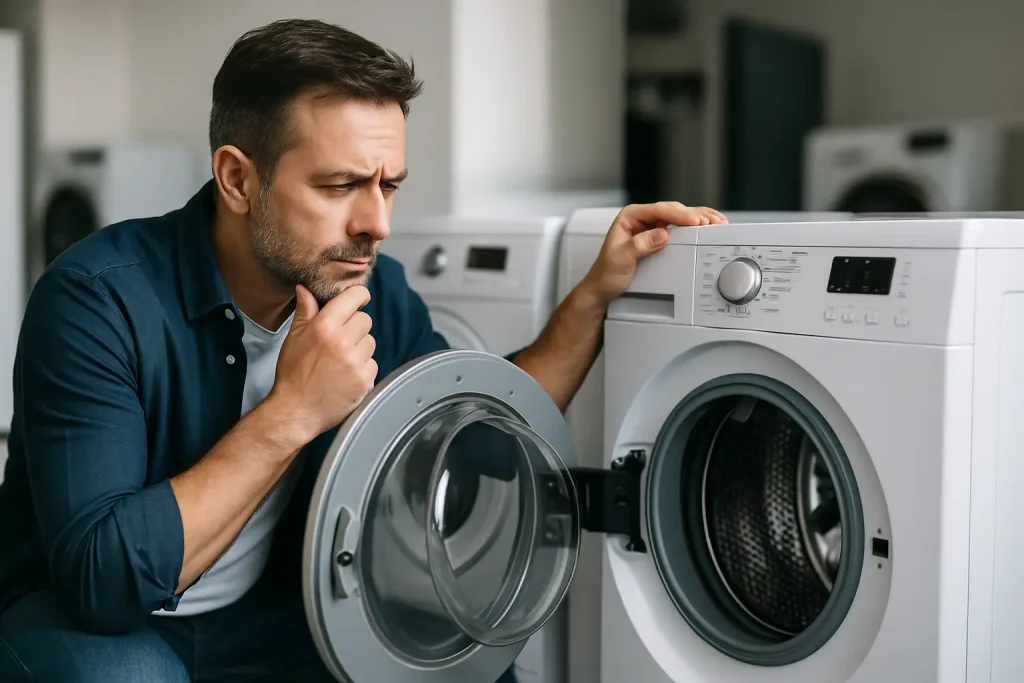
You can spot a bad used machine deal the same way you spot a bad day in the plant – it starts with small “savings” that turn into downtime.
If you are searching for a used laundry machine for sale, you are probably trying to do one of three things: open with less capital, add capacity fast, or replace a unit that is costing you labor and repeat service calls. Used equipment can absolutely be the right move in commercial laundry. It just has to be the right unit, in the right condition, with the right expectations.
Why “used” works in commercial laundry (and when it does not)
Commercial machines are built for cycles, not for appearances. A professional washer-extractor or tumble dryer can deliver years of productive life after its first home – especially if it was maintained on schedule and not pushed outside its design limits.
Used also makes sense when your constraint is time. Lead times on new builds can be a real operational problem when you have contracts to fulfill, rooms to turn, or a laundromat floor that needs every pocket generating revenue.
The trade-off is simple: you are accepting more variability. Two “identical” used machines can be very different depending on water quality, chemical exposure, venting, loading habits, and how quickly small problems were addressed. If your operation cannot tolerate uncertainty, or you do not have maintenance support, new equipment may be the cheaper decision over a five-year horizon.
Start with fit, not price
Before you evaluate a single listing, decide what “fit” means for your facility. Price is only a good filter after you know the capacity and configuration you actually need.
Match the machine type to the job
A used hard-mount washer in the wrong environment can create vibration complaints, cracked floors, and unhappy neighbors. A soft-mount washer-extractor in a high-abuse setting may survive, but it may not be the best long-term value.
Most buyers are comparing a few core categories: commercial washers, washer-extractors, tumble dryers, stacked washer/dryer systems, and specialty units like industrial heat-pump dryers. If you are running hospitality or healthcare OPL, your decision is often driven by pounds per hour and utility limits. If you are running a laundromat, it is driven by vend mix, floor layout, and how quickly customers can turn loads.
Check utilities and site realities early
Used equipment gets expensive when it forces a building change. Gas type and pressure, electrical requirements, venting diameter and run length, and water supply and drainage are not details to “figure out later.” If the used dryer you love needs a venting redesign, you just bought a construction project.
This is also where stacked systems can be a win. They can add turns per square foot, but only if access for service, lint cleaning, and customer use is practical.
What to inspect on any used laundry machine for sale
You do not need a long checklist to make a strong buying decision. You need to focus on the items that cause downtime, rework, and repeated service calls.
Washers and washer-extractors: where problems hide
Start with bearing health. Listen for rumble, check for play, and look for evidence of chronic leaks. A machine can “run” while heading straight toward a bearing job – and that job is not priced like a hose replacement.
Look at the door boot and door lock function. If the machine has frequent door faults, the issue may be alignment, switch wear, or control problems. Any one of those can be manageable, but you want clarity before you put it on your floor.
Inspect the cylinder and frame for corrosion, especially if the prior site used aggressive chemistry or ran high chlorine loads. Corrosion is not just cosmetic. It can become vibration and failure.
Finally, confirm the control platform is healthy. A used unit with an intermittent board fault will burn your team’s time. Ask what was repaired recently, and whether any fault codes are recurring.
Tumble dryers: prioritize airflow and heat safety
Dryers live and die by airflow. If you are evaluating a used dryer, check lint accumulation patterns, blower condition, and the integrity of the lint drawer and door seals. Poor sealing and poor airflow become longer dry times, higher gas usage, and more heat stress on components.
Verify burner ignition consistency (for gas units) and inspect the heat exchanger area for signs of overheating. Make sure the high-limit safeties and door switches function properly. A used dryer that trips safeties is not “just being picky.” It is telling you something is wrong.
Stacked washer/dryer systems: the service access test
Stacked units can be excellent in small footprints, but only when they are serviceable. Confirm you can access pumps, valves, belts, igniters, and control components without disassembling half the unit on the floor. A low-cost used stack can become a high-labor stack.
Ask for the information that separates a real deal from a gamble
A serious seller can usually provide basic facts quickly. You are not trying to interrogate anyone. You are trying to reduce operational risk.
Ask where it was used (laundromat, hotel, healthcare, dry cleaner backroom). Ask approximate cycles per day, and whether the machine was under a preventive maintenance routine. If there are service records, request them. If there are no records, that does not automatically kill the deal – it just changes the price you should be willing to pay.
Also ask what is included. In commercial laundry, “included” matters: coin or card interface, soap systems, drain valves, stacking kits, reversing components, and any required mounting hardware can change your installed cost.
Brand and parts reality: buy what you can support
Commercial buyers tend to stick with recognized lines for a reason. Brands like Speed Queen, UniMac, Wascomat, and LaPauw have established parts ecosystems and service familiarity. That does not mean every used unit from a major brand is a safe buy, but it does mean you are less likely to get stuck with an orphan machine.
Think in terms of serviceability. Can you source wear parts quickly? Do local techs know the platform? Is the control system common enough that replacements are realistic?
This is where procurement gets practical: a used machine that is down for two weeks waiting on a specific part is not “cheap.” It is lost turns, missed deadlines, and frustrated customers.
Budget like an operator, not a shopper
If you are comparing used units, build a budget that matches reality.
You are paying for the machine, but you are also paying for rigging, freight, install labor, gas and vent connections, water and drain work, and the first round of maintenance items that make the unit dependable. Many operators plan for immediate replacement of consumables like belts, seals, hoses, and filters so the machine starts its second life with a clean baseline.
It also pays to stock a small set of spares for the first 90 days, especially if the unit is critical path for your production. When a washer is responsible for a large share of your daily pounds, a simple valve or door switch should not be a multi-day event.
Used equipment decisions by facility type
Your “best” used buy depends on how your operation makes money.
A laundromat operator may prioritize vend mix, customer experience, and quick turns. Here, cosmetic condition matters more than it does in a backroom plant, but reliability still wins. A hotel OPL often prioritizes consistency and ease of training – the machine that your team can run correctly every shift is the machine that protects your linen budget. Healthcare and linen service buyers usually focus on throughput and repeatability, with less tolerance for unplanned downtime.
Dry cleaners often have a tighter footprint and may value stacked systems or smaller commercial units that match their workflow. In these environments, the wrong used machine is not just a maintenance problem – it is a layout problem.
When to walk away
Some used deals are not “projects.” They are dead ends.
If the machine has visible structural damage, chronic corrosion in critical areas, or unresolved control faults that the seller cannot explain, treat it as a parts unit unless you have a clear refurbishment plan. If the seller will not demonstrate operation under load or will not answer basic questions about condition and history, do not let a low sticker price pull you into a high-risk purchase.
And if your site requirements are not a match – power, gas, venting, drainage, floor, or clearance – the right decision may be to keep shopping rather than forcing the building to adapt.
Getting help from a specialized supplier
Many operators do not want to manage five vendors just to keep a laundry running. They want one relationship that understands the equipment and can also supply the operational items that keep production moving.
If you want a single-source partner for commercial laundry equipment plus recurring essentials like marking tapes, fasteners, needles, and laundry pens, ABELCO EQUIPMENT TRADING LLC is specialized in the laundry and dry-cleaning equipment industry and supports operators with dependable availability and compatible supply. You can reach the catalog and contact options at https://Www.abelco.me.
A used purchase goes better when the conversation includes parts compatibility and ongoing supply from the beginning, not after the machine is already on the floor.
The best used machine is the one that stays running
If you are hunting for a used laundry machine for sale, do not try to “win” the deal on price. Win it on uptime. Ask the questions that reveal how the unit lived, inspect the components that actually fail, and choose equipment you can support with parts and service.
A used machine that starts every morning and finishes every shift is not a compromise. It is a smart procurement decision that respects your throughput, your labor, and your customers’ expectations.