

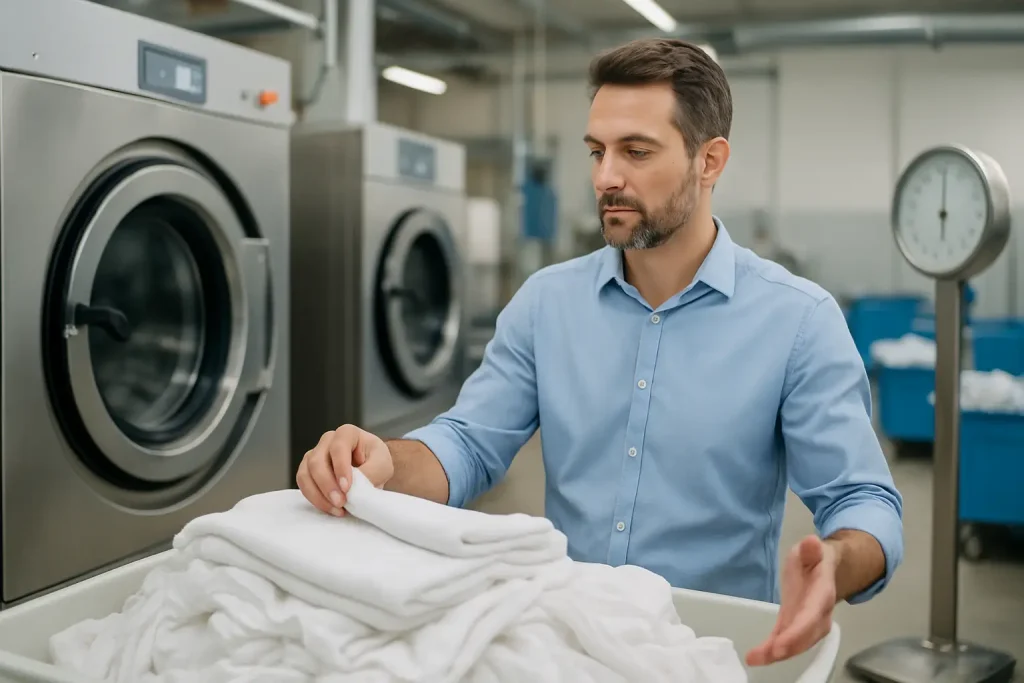
A hotel hits full occupancy on a weekend, a care facility has a compliance audit on Monday, and a laundromat gets slammed after a storm. Different businesses, same problem: the linen has to come out clean, dry, and on time. That is the real definition of professional laundry – not just bigger machines, but controlled throughput, repeatable quality, and the ability to keep producing even when something breaks.
This is a practical guide for operators and decision-makers who buy based on performance, serviceability, and supply continuity. If you are building a new operation, expanding capacity, or trying to reduce downtime, the details below are what move your numbers.
What “professional laundry” really means in daily operations
Professional laundry is a production environment. You are managing volume, labor minutes, utility costs, fabric life, and customer expectations at the same time. That changes how you should think about equipment and supplies.
In a home setting, you can re-run a load if it comes out wrong. In a professional setting, rework is expensive because it steals machine time and labor while pushing delivery windows. Quality matters, but consistency matters more. The goal is a process that a new team member can follow on a busy day without “guessing” their way through chemistry, loading, drying, and finishing.
The other defining factor is uptime. The best margins in professional laundry often come from avoiding stoppages. A single down washer-extractor can bottleneck the whole room even if every dryer is running.
Start with throughput, not machine count
A common mistake is buying “enough machines” instead of buying enough production. Throughput depends on cycle time, extraction performance, dry time, and changeover time. Two operators can own the same number of machines and get very different output.
Capacity planning starts with what you need per hour, not per day. Peak hours are what break you. If you need 600 pounds per day but 60% of it arrives in a 4-hour window, your plant needs to be built for that peak or you will pay for it in overtime and late deliveries.
It also depends on your mix. Towels and bath mats behave very differently than sheets. Healthcare linen demands higher hygiene control and often higher rewash risk. A dry cleaner adding wet cleaning has different flow constraints than a laundromat doing self-service.
Equipment choices that change your results
Washers vs washer-extractors: why extraction is money
For professional laundry, extraction performance is one of the fastest ways to improve productivity. Higher G-force extraction removes more water before the load hits the dryer. That can cut dry time, reduce gas or electric use, and increase dryer capacity without buying more dryers.
The trade-off is that higher extraction demands solid installation, correct loading, and good maintenance. Poorly balanced loads create vibration, bearing wear, and avoidable downtime. If your staff often overloads or mixes heavy and light items, you may get better real-world results from a machine that is slightly less aggressive but more forgiving.
Tumble dryers, stacked systems, and heat-pump dryers
Tumble dryers win when you need speed and straightforward serviceability. Stacked washer/dryer systems can be the right call when floor space is the limiting factor, especially in on-premise laundry where footprint matters.
Industrial heat-pump dryers can make sense where energy costs are high, ventilation is constrained, or you want lower temperature drying for fabric care. The trade-off is that heat-pump systems are more sensitive to airflow management, lint control, and proper maintenance intervals. They can pay back well, but only if you run them as designed and keep filters and pathways clean.
Commercial brands and serviceability
Recognized commercial lines like Speed Queen, UniMac, Wascomat, and LaPauw are built for repair and long duty cycles. That matters because a professional laundry does not just need machines that run – it needs machines that can be kept running with available parts, clear access, and predictable maintenance.
When you compare models, look beyond the brochure specs. Ask what a bearing job looks like, how long it takes to swap common wear items, and whether your team can access parts quickly. If you cannot get compatible spares when you need them, the “best” machine on paper becomes an expensive bottleneck.
The hidden drivers: consumables and small parts
If you want fewer stoppages, pay attention to the small items that quietly control workflow. In many plants, lost time comes from missing consumables, not major breakdowns.
Marking tapes, fasteners, needles, and laundry pens are not exciting, but they keep identification, sorting, and accountability intact. When you run hotel linen, multi-tenant housing, or institutional accounts, mis-sorts become credits, complaints, and rewash. Simple identification supplies help keep the right goods moving to the right customer.
Spare parts planning matters the same way. A professional laundry should not wait for a failure to learn that a specific belt, drain component, or door part is out of stock. Your maintenance plan should include a shortlist of wear items by machine type and a reorder point based on your usage. This is basic procurement, but it is one of the most effective ways to protect uptime.
Process control: the difference between “clean” and “consistent”
Even with great equipment, inconsistent process creates rewash, odor complaints, fabric damage, and higher chemical spend. Professional laundry performance comes from standardization.
Load weight is the first control point. Underloading wastes water, chemistry, and heat per pound. Overloading reduces mechanical action, increases soil retention, and can cause poor rinsing. If your team loads by “how full it looks,” you will get variable results. A scale and clear target weights by machine size are simple, practical fixes.
Water temperature and chemistry control are next. Different soils need different formulas, and fabrics have limits. Hospitality loads often need bright, soft results with controlled residuals. Healthcare and linen services need validated hygiene outcomes. Overuse of alkali or bleach can shorten fabric life, while under-dosing increases rewashes. The most cost-effective plants tune chemistry to their real soil profile and measure rewash rates over time.
Drying control matters more than many operators think. Overdrying damages fibers, shrinks goods, and increases lint. Underdrying creates odor, storage issues, and customer complaints. If you are chasing speed by running everything “hot and long,” you are paying for it in replacement costs.
Maintenance that protects production
Professional laundry maintenance is not about perfection. It is about preventing the failures that stop the room.
Daily basics like lint removal and visual checks reduce fire risk and airflow loss. Weekly checks on seals, drains, and unusual noise catch problems early. Monthly attention to belts, bearings, and vibration trends keeps machines stable. The right schedule depends on volume and environment, so it is reasonable to adjust intervals based on what you see.
There is also an “it depends” reality: some operations have a strong in-house tech, others rely on external service. If you rely on outside service, you need better parts readiness because a two-day delay is a production problem. If you have in-house capability, invest in the parts and consumables that let your tech finish repairs in one visit, not three.
Procurement strategy: reduce downtime with fewer supplier gaps
Operators often lose time by splitting purchases across too many sources: one supplier for machines, another for consumables, and another for parts that may or may not match the model in the room. That fragmentation creates compatibility risk and longer lead times.
A single-source approach is not about convenience only. It is about continuity of supply. When the same supplier understands your machine mix and your recurring needs, reorder cycles get simpler and emergency requests get faster.
That is exactly why ABELCO EQUIPMENT TRADING LLC focuses on being a specialized partner for commercial laundry and dry-cleaning operations – heavy-duty equipment plus the recurring supplies and compatible spares that keep production moving. If you want a practical, procurement-friendly place to consolidate categories, you can see the product focus at https://Www.abelco.me.
Choosing upgrades that actually pay back
Not every upgrade improves results. The best investments usually hit one of three outcomes: more pounds per hour, lower cost per pound, or fewer downtime events.
If you are consistently backed up at the dryers, better extraction or additional dryer capacity pays back quickly. If you are utility constrained, heat-pump drying or more efficient washer-extractors may be the right lever. If your quality issues come from rewash and mis-sorts, identification consumables and process discipline can deliver a bigger return than another machine.
Be honest about constraints. Space, venting, gas supply, drain capacity, and staffing can limit what equipment can do. A faster washer does not help if your sorting table is the real bottleneck. A bigger dryer does not help if your team cannot keep it fed.
A practical way to assess your operation this week
Walk the floor and identify where time is lost. Is it waiting for machines, waiting for staff, or waiting for decisions? Look at your rewash pile, your lint build-up, and your “machine down” log. Then ask one simple question: what change would prevent the next stoppage?
Sometimes the answer is a new washer-extractor or dryer. Sometimes it is stocking the right spare parts and consumables so a minor issue does not become a shutdown. Sometimes it is tightening load weights and drying settings so you stop paying for rework.
A professional laundry is not won by one purchase. It is won by keeping production predictable, day after day – and making sure the next time your operation gets hit with peak demand, your equipment, parts, and process are ready to carry it.