

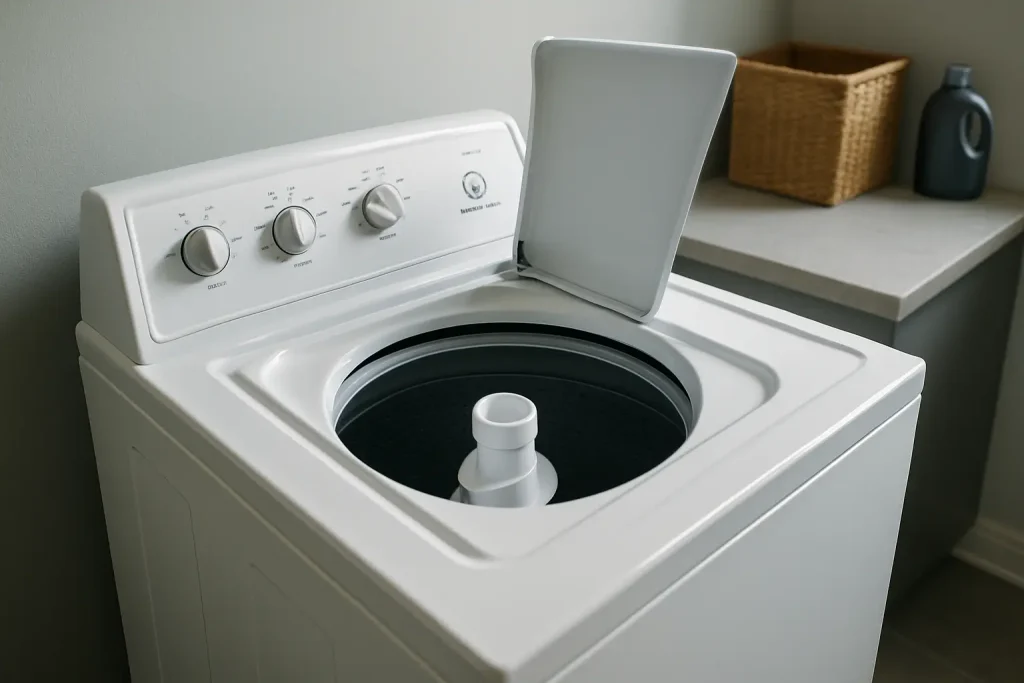
A top-load washer is rarely the “cheap” choice in a commercial setting. It is the choice you make when you want dependable turns, straightforward service, and a machine your staff (or customers) won’t fight with at 7:00 p.m. on a Saturday.
If you are evaluating a speed queen 60hz commercial top load washer, you are already in the right lane: commercial build, commercial parts support, and a format that fits a lot of real-world laundromat and on-premise laundry (OPL) workflows. The key is buying the right configuration for your location, your utilities, and the way your operation actually runs.
Why “60Hz” matters more than most buyers expect
Frequency is not a spec you want to gloss over. In most of the US, 60Hz is standard. That makes sourcing and operating 60Hz commercial equipment straightforward: the motor and control system are designed to run at the intended speed and torque, and the machine behaves the way the factory designed it to behave.
Where buyers get burned is mixing frequency assumptions across sites or procurement teams. A washer designed for 50Hz operation and placed on a 60Hz supply can run differently than expected, and not in a good way. You can end up with performance issues, nuisance errors, or premature wear. If your facility is US-based, 60Hz keeps you aligned with local power standards, local service expectations, and simpler replacement planning.
If you operate multiple facilities across regions, frequency becomes a purchasing control point. Lock it into your approval process the same way you lock in voltage and drain requirements.
What a commercial top loader does well (and where it doesn’t)
A commercial top load washer earns its place by staying productive with minimal drama. In laundromats, top loaders are familiar, fast to load, and forgiving when customers bring mixed items. In OPL environments, they can be a smart secondary capacity layer for smaller loads, quick turns, or special-use items where you do not want to tie up a larger washer-extractor.
Top loaders are not the best fit for every volume profile. If your business depends on processing high-poundage loads all day, you may get better efficiency per pound from larger front-load washer-extractors. If your facility is chasing maximum water and energy efficiency targets, a modern commercial front-load platform often has the edge.
So the trade-off is simple: top loaders often win on simplicity, speed of use, and familiar operation. Front-load platforms often win on scalability and efficiency per pound. It depends on what is constraining you right now – floor space, cycle time, labor, utilities, or customer behavior.
Throughput comes from cycle control, not just capacity
When buyers compare washers, they tend to fixate on “how much fits in the tub.” In commercial reality, throughput is a three-part equation: usable capacity, cycle time, and how consistently the machine hits those cycles without faults.
A speed queen 60hz commercial top load washer is usually purchased because operators want repeatable cycles and fewer service interruptions. That matters just as much as raw capacity. A washer that is theoretically bigger but regularly goes out of service costs you more than the spec sheet suggests.
If you are running a laundromat, think in turns per day per machine, not just pounds. If you are running an OPL, think in “loads cleared per shift” and how often staff have to restart a cycle, rebalance, or move items because a machine is down.
Controls: choose the interface that fits your environment
Controls are where the operator experience lives. In a customer-facing laundromat, you want controls that are intuitive, durable, and resistant to misuse. In an OPL, you want controls that support your standard operating procedure: consistent water levels, temperatures, and cycle selections that match your linen types.
If you need price flexibility (multi-vend, promotional pricing, off-peak strategy), you will care about control compatibility with your payment environment and how easily your team can manage settings. If you need process consistency, you care about locking down settings so staff do not “freestyle” cycles and create rewash.
The practical way to decide is to map your top three load types, then ask a simple question: can the control system make the right choice the easy choice? If not, you will pay for it in rewash, complaints, and wear.
Water, drain, and installation realities
Top loaders are often easier to drop into existing footprints, but they are still commercial machines and they still need correct site conditions.
Start with water supply and drain performance. Slow fill times add up fast in high-turn environments. Weak drainage can cause cycle delays and can also lead to odor issues and customer complaints. In OPL settings, poor drainage can interrupt a shift rhythm and create bottlenecks that look like “labor problems” when they are really plumbing problems.
Also confirm your floor and leveling conditions. Out-of-level installs create vibration, noise, and accelerated component wear. If you have ever watched a machine “walk,” you already know it is not a harmless nuisance – it is downtime waiting to happen.
Serviceability is the hidden ROI
Most commercial laundry buyers say they want durability. What they actually need is durability plus fast recovery when something does fail.
Serviceability shows up in a few real-world ways: how quickly a tech can access components, whether parts are common and available, and whether troubleshooting is straightforward. In a laundromat, every out-of-order sign is lost revenue and a reputation hit. In hospitality or healthcare OPL, downtime can become a linen shortage, delayed room turns, or emergency outsourcing.
A commercial top loader from a recognized brand is often chosen because operators expect a clearer service path over the life of the machine. That is not marketing language – it is the difference between a two-day interruption and a two-week interruption when a part is needed.
Matching the washer to your business type
Laundromats tend to prioritize customer familiarity, cycle reliability, and simple maintenance. A top-load bank can be a strong anchor when your market expects that format and you want a mix of price points across your floor. If you are in a competitive area, keeping machines running and keeping turns moving is usually worth more than chasing theoretical efficiency gains that customers never notice.
Hotels and multi-family OPL operations often prioritize predictable operation and a machine mix that supports peak periods. A top loader can handle housekeeping “quick hits” without tying up larger capacity machines. If your staff rotates often, familiar interfaces reduce training time and reduce misuse.
Dry cleaners and specialty textile operations may use a top loader for specific items or back-of-house needs, but you should be cautious about chemical and soil profiles that require controlled programming or extraction performance beyond what you expect from a top-load format. This is a place where “it depends” is real: your textile mix and finishing workflow determine whether a top loader is a workhorse or a distraction.
Healthcare and linen services typically evaluate equipment through infection control policies, rewash rates, and uptime requirements. If your compliance standards require tight control over cycle parameters and documentation, you may lean toward equipment families designed for that level of process control. But for secondary use cases and smaller loads, a dependable commercial top loader can still be a practical tool when deployed intentionally.
What to ask before you buy
A good procurement decision is less about brand preference and more about reducing surprises. Before you commit, confirm your site power (including frequency), water conditions, drain requirements, and how the washer will be used day-to-day.
You also want clarity on parts continuity. Commercial laundry is not a one-time purchase. You are buying a long service life with predictable replacement of wear items. Make sure you have a supply plan that covers both the machine and the recurring operational needs around it – because the washer is only productive if you can keep it productive.
If you are sourcing equipment and ongoing consumables through one specialized partner, you reduce procurement time and reduce the “wrong part, wrong fit” mistakes that drain maintenance budgets. For commercial laundry operators who want that single-source approach, ABELCO EQUIPMENT TRADING LLC supports equipment and ongoing supply needs for professional laundry environments – details at https://Www.abelco.me.
When a top loader is the wrong answer
It is better to call this out early. If your bottleneck is extraction (too much moisture going into dryers), a washer-extractor with higher G-force can be a better investment because it shortens dry times and boosts dryer throughput. If your labor model depends on processing large loads with fewer touches, larger front-load machines may fit better.
And if your utility costs are extreme or you are under strict conservation requirements, you should compare total water and energy per pound, not just purchase price. A top loader can still be the right tool, but it should be a deliberate choice based on your constraints.
A commercial laundry room is a production environment. Buy the machine that matches your production reality, then support it with the right parts and supply continuity so it stays in service when you need it most.