

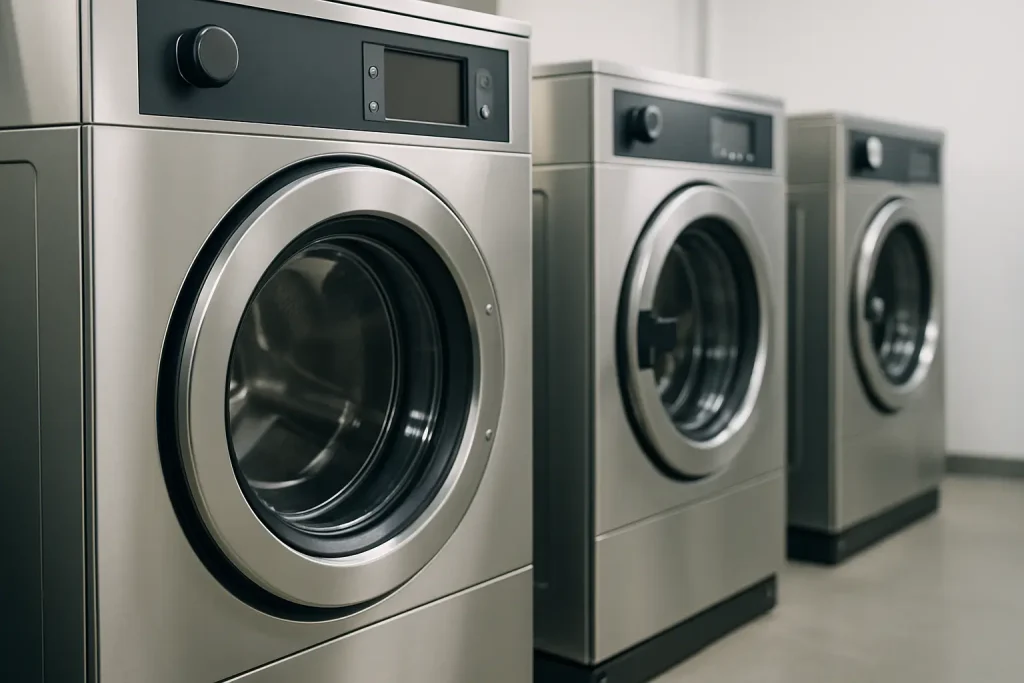
A busy laundry floor doesn’t fail all at once. It starts with small delays: a dryer that takes two cycles to finish towels, a washer that trips an error mid-shift, a drain valve that sticks and forces a restart. The real cost is not the repair invoice – it’s the lost turns, backed-up carts, and overtime that show up every week until you finally replace the unit.
If you’re buying commercial laundry machines, you’re not shopping for “features.” You’re buying predictable throughput, repeatable results, and equipment you can keep alive with compatible parts. Here’s a practical way to think about machine types, sizing, utilities, and what actually matters when you’re trying to keep uptime high.
What “commercial” should mean for your operation
Commercial laundry machines are built for cycles per day, not occasional use. That sounds obvious, but it changes everything about how you evaluate a purchase.
A true commercial platform should give you three things: stable programming (so staff can run the same formulas every shift), serviceability (so a tech can diagnose and repair without guessing), and durability in the places that get punished – bearings, seals, door switches, valves, belts, igniters, contactors, and airflow components.
It also means you should be planning around maintenance and parts from day one. Even the best machine becomes a liability if you can’t source the right drain valve, gasket, sensor, or belt quickly.
Match the machine type to the way you make money
Different laundry models make money in different ways. A laundromat cares about turns per day and customer experience. A hotel laundry cares about finishing linens on time without rewash. Healthcare and linen services care about consistency, temperature control, and process discipline. Dry cleaners often need smaller batches, specialty cycles, and reliable finishing flow.
That’s why “best machine” isn’t a universal answer. The right choice depends on your load mix, staffing, and whether your bottleneck is washing, drying, or handling.
Washers vs washer-extractors
For many professional sites, washer-extractors earn their keep because extraction is production. Higher G-force removes more water before drying, which reduces dryer time, improves throughput, and can lower energy use. The trade-off is you need the right foundation, proper installation, and operators who won’t overload.
A standard commercial washer can still be the right call for lighter duty or simpler installations, but if you are consistently waiting on dryers, extraction is often the first lever to pull.
Tumble dryers and the airflow reality
Drying is rarely “just heat.” It’s airflow, make-up air, and a vent path that stays clean. A high-capacity dryer in a room that can’t breathe will disappoint you every day.
Gas models can deliver fast recovery and strong performance, but only if gas supply and ventilation are correctly set up. Electric models can be easier to place in some facilities, but cycle times and operating cost can shift depending on local utilities.
Stacked washer/dryer systems
Stacked units are a practical answer when square footage is your limiting factor. They can also simplify layout in small on-premise laundries and multi-family applications.
The trade-off is service access and workflow. If one component goes down, you may lose the whole station. That’s not a deal breaker, but it should be part of your downtime plan.
Industrial heat-pump dryers
Heat-pump dryers are getting more attention where energy costs are high or venting is constrained. They can reduce external exhaust requirements and lower energy consumption in the right setting.
The “it depends” part is speed and load type. If you run heavy terry all day and need maximum throughput, you should review cycle expectations carefully. If your priority is efficiency, controlled drying, and a facility where venting is difficult, heat-pump options can fit.
Sizing commercial laundry machines: stop guessing by pounds alone
Capacity labels help, but they don’t protect you from mismatch. Two facilities can both buy a 30 lb washer and get completely different results based on what they load and how they schedule.
Start with what you process and when. If your peak is a two-hour window where everything must be done before check-in, you need capacity that clears that spike. If you have steady all-day work, you can size for average flow.
Also watch density. Towels, microfiber, and mixed hotel linen behave differently than uniforms or lightweight items. Overloading is the fastest way to turn a commercial machine into a service call.
A practical rule: don’t size only to the biggest load you’ve ever seen. Size to the loads you run every day, then plan a path for overflow – either a second unit, a larger extractor, or a scheduling change.
Throughput is a system: wash + extract + dry + handling
Operators often replace a washer because the washer is old, then realize the real bottleneck was drying. Or they buy a bigger dryer and find out their extraction is too weak, so the dryer still runs long cycles.
Think in matched pairs. If you increase washer capacity, plan dryer capacity and airflow to match. If you move to higher extraction, confirm your dryers can take advantage of it. If your team spends time sorting and re-sorting, consider whether adding carts, tables, and a clearer soil-to-clean layout will give you more “capacity” than another machine.
Utilities and installation: where good purchases go bad
A solid machine can look terrible if it’s installed into the wrong conditions. Before you commit, pressure-test these basics.
Power and electrical
Confirm voltage, phase, and amperage. A mismatch leads to nuisance trips, poor performance, or expensive corrections. It’s also worth planning for service access and safe shutoff points.
Water supply, temperature, and drainage
Hot water capacity matters if you rely on temperature for results. If your water heater can’t keep up, cycles drift and rewash increases. Drainage matters too – slow drains extend cycle time and can trigger faults.
Gas supply and venting
For gas dryers, supply sizing and vent layout are non-negotiable. Long vent runs, too many turns, or shared vents can kill performance and increase lint issues. Make-up air is just as important – dryers can’t move air if the room is starved.
Reliability and parts: what to ask before you buy
Commercial laundry machines are long-term assets. Your goal is not “no maintenance.” Your goal is fast, predictable maintenance with parts you can actually source.
Ask direct questions. Can you get door gaskets, drain valves, belts, igniters, sensors, and switches without waiting weeks? Are wear items standard and documented? Is the control system readable and diagnosable, or does every problem become a guessing game?
Also consider your site’s reality. If you don’t have an in-house tech, choose equipment that local service providers commonly support. If you do have in-house capability, prioritize machines with clear service access and consistent parts.
This is where a specialized supplier relationship matters. If you’re buying machines plus the consumables that keep daily work moving – marking tapes, fasteners, needles, laundry pens, and the small items that operators burn through – you reduce the number of gaps that turn into downtime.
Picking brands and platforms: proven matters more than trendy
Commercial laundry buyers tend to stick with platforms that have a track record, and for good reason. Familiarity helps training, parts identification, and service consistency.
Recognized commercial brands like Speed Queen, UniMac, Wascomat, and LaPauw show up in professional environments because they’re built for volume and service cycles. That does not mean every model is right for every site, but it does mean you’re less likely to get stuck with a machine nobody wants to touch.
If you’re comparing options, look past the brochure. Focus on duty cycle expectations, real-world service history, and whether the machine’s design matches your staff behavior. For example, a facility with frequent turnover may do better with simpler controls and fewer “creative” settings.
New install vs replacement: two different decisions
A new build gives you freedom to design layout, utilities, and workflow around the equipment. Replacements are usually about minimizing disruption and restoring capacity quickly.
If you’re replacing, be honest about why the old machine failed. If it was consistently overloaded, putting in the same size again may repeat the problem. If the room runs hot and lint builds up, solving airflow may extend the life of the next unit more than any brand change.
If you’re building new, don’t overspend on capacity you can’t staff. Extra machines don’t help if no one can load, unload, fold, and move carts. In many sites, a clean layout and matched wash-to-dry flow beats adding one more oversized unit.
Where Abelco fits for operators who need continuity
If your priority is keeping production moving with a single source for equipment and ongoing operational supplies, ABELCO EQUIPMENT TRADING LLC focuses specifically on the commercial laundry and dry-cleaning environment. That specialization matters when you’re buying not only washers, washer-extractors, tumble dryers, stacked systems, and industrial heat-pump dryers, but also the consumables and spare parts that prevent small issues from becoming downtime.
The buying mindset that saves you money
Treat commercial laundry machines like production equipment, not appliances. Make the decision the way you’d spec any revenue-critical asset: match it to your peak demand, confirm utilities, plan parts, and set expectations for maintenance.
The helpful way to close this out is simple: the “right” machine is the one your team can run all week without surprises – and when something wears out, you can get the exact part, fix it fast, and keep the carts moving.