

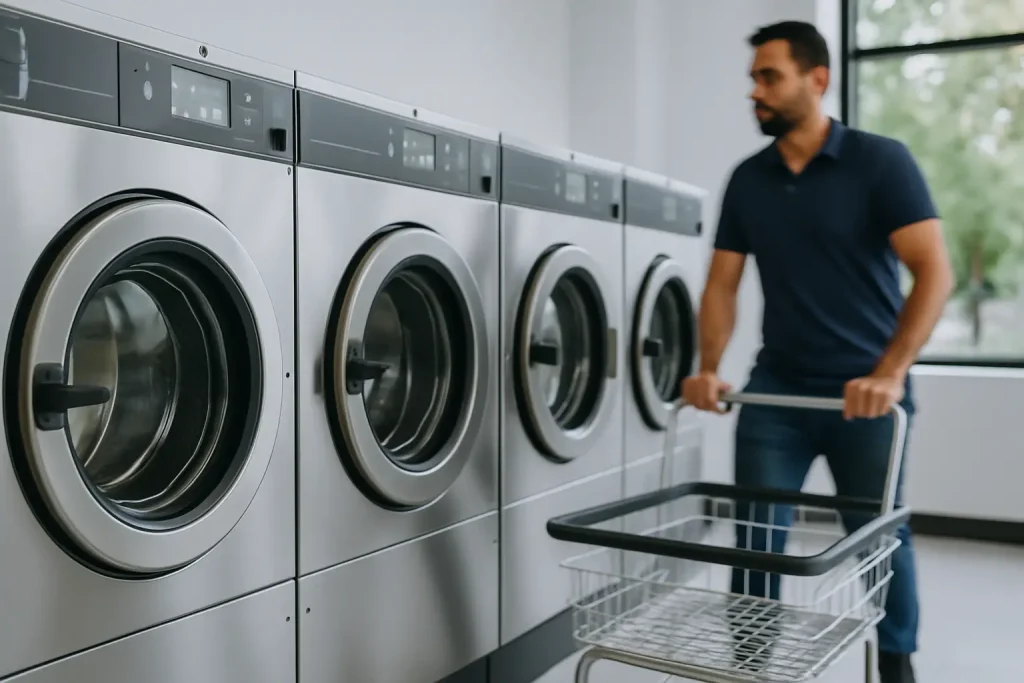
A washer can be “working” and still costing you money – through re-washes, long cycle times, chronic imbalance, and the kind of small breakdowns that tie up staff all day. In commercial laundry, you do not buy a machine. You buy predictable throughput and the ability to keep doors open.
Speedqueen laundry machines are on a lot of shortlists for a reason: they are built for repetitive commercial use, straightforward serviceability, and consistent results across mixed loads. Below is how operators typically evaluate where Speed Queen fits best, what to spec, and what to plan for so the equipment stays productive.
Why speedqueen laundry machines show up on pro bids
Durability gets most of the attention, but the operational value usually comes from three practical factors.
First is uptime. Commercial sites are not running “a few loads a day.” They are running a steady flow, and downtime is rarely isolated – one failed washer backs up your dryers, your folding, your staff schedule, and your customer experience.
Second is consistency. When wash action, extraction, and temperature control stay stable, you reduce re-washes and complaints. That matters in hospitality and healthcare, but it also matters in laundromats where customer perception is your brand.
Third is service practicality. Equipment that is common in the field tends to be easier to keep running because technicians know it, parts are identifiable, and maintenance routines are well understood. That does not eliminate repairs, but it helps you control them.
None of this means Speed Queen is the only answer. It means it is often a low-regret choice when you want a dependable commercial platform and you plan to operate for years.
Start with your operation type, not the machine
Most “wrong machine” purchases happen when buyers start with model names instead of workflow. A laundromat has different constraints than an on-premise laundry (OPL) at a hotel, and both differ from a dry cleaner handling specialty items.
Laundromats: capacity mix and customer behavior
For laundromats, the machine mix is usually the profit lever. Too many small-capacity washers and you create lines for larger customers. Too many large machines and you may leave revenue on the table during off-peak hours.
Speed Queen commercial washers and washer-extractors are commonly deployed in tiered capacity layouts, paired with tumble dryers that match the extraction performance. When extraction is strong and consistent, dryer time drops, and customers notice.
Hospitality and OPL: throughput, staffing, and utility limits
Hotels and institutional OPL sites tend to care less about “variety” and more about finishing predictable pounds per hour with limited labor. Here, washer-extractors with strong G-force extraction can be a serious advantage because the dryer becomes the bottleneck in many plants.
Also check utility reality early. If your hot water recovery is weak or your electrical service is tight, your “perfect” machine on paper can turn into a daily compromise.
Multi-housing and managed laundry rooms: reliability and control
In multi-family settings, you want equipment that can handle abuse, mixed load quality, and frequent starts and stops. Stacked washer/dryer systems can be the right use of footprint, but only if access for service is acceptable and your venting is correct. A tight install with poor airflow will punish any dryer, regardless of brand.
Choosing the right category: washers, washer-extractors, stacks, dryers
Speed Queen lines typically fall into familiar commercial categories. The best choice depends on load type, space, and how you make money.
Commercial washers vs. washer-extractors
If you are handling heavier textiles or you need serious extraction to reduce dryer time, washer-extractors are usually the operational play. They cost more up front, and they often require more attention to installation, but they can pay back through shorter dry cycles and fewer “still wet” rework loads.
If your operation is lighter-duty, space-constrained, or oriented toward customer self-service with predictable loads, commercial washers may be the simpler fit.
Tumble dryers: match them to extraction, not just capacity
Dryer purchases are often made by drum size alone. In practice, you want a dryer that complements your washer-extractor performance, your venting design, and your turnover expectations.
Gas dryers can be a strong choice where gas is available and venting is designed correctly, because recovery and operating cost can be favorable. Electric dryers can be practical where gas is not available, but make sure your electrical service is built for continuous commercial duty.
Stacked systems: footprint wins, service access matters
Stacked washer/dryer systems can help you add turns per square foot, which is real money in laundromats and managed laundry rooms. The trade-off is service access and heat management. Plan the install so panels can be accessed without moving machines, and confirm vent runs are short and efficient.
What experienced buyers check before they buy
Commercial laundry procurement is less about features and more about avoiding predictable problems. These checkpoints tend to prevent the expensive surprises.
Utilities and infrastructure
Confirm voltage, phase, breaker sizing, gas supply where applicable, hot and cold water sizing, and drain capacity. If your facility is older, do not assume what is on the wall is what you need. Undersized drains and poor venting are common culprits behind “mystery” performance issues.
Cycle time and real throughput
Capacity ratings do not equal throughput. Throughput is cycle time, load type, extraction effectiveness, and how fast staff or customers can turn loads. If you are upgrading, measure your current pounds per hour and identify the bottleneck before you buy.
Controls and user environment
In a laundromat, simplicity wins. Customers do not want a learning curve, and you do not want calls to staff every hour. In OPL, you may want more control and repeatability. Align the control style with your labor reality.
Service plan and parts continuity
Any commercial brand will need maintenance. What matters is how quickly you can get back online.
Keep a practical view here: belts, hoses, valves, door components, and wear items are not “nice to have.” They are uptime insurance. If you operate at scale, it is often worth keeping basic spares on hand and standardizing models so your parts shelf stays useful.
The trade-offs operators should be honest about
Speedqueen laundry machines tend to justify themselves in high-use environments, but there are still trade-offs to weigh.
Up-front cost can be higher than entry-level alternatives, especially when you step into larger washer-extractor platforms. If your volume is low or your facility is temporary, the payback period may not make sense.
Commercial performance also depends on installation discipline. A great machine installed with poor venting, undersized gas, or weak hot water will underperform and create avoidable service calls.
Finally, standardization can be a double-edged sword. Standardizing on a platform helps training and parts, but it concentrates your dependency. The way to manage that risk is simple: plan parts continuity and keep a supplier relationship that can respond quickly.
Buying approach: new builds vs. replacements
New builds let you design around the equipment. Replacements force you to work with what you have.
For new laundromats or OPL builds, lock the utility plan early and design your capacity mix from peak-hour reality, not average day assumptions. Leave room for service access and airflow. Those two details matter more than most “feature” debates.
For replacements, focus on drop-in fit, utility compatibility, and the fastest path back to stable throughput. If your downtime is already costing you, an incremental upgrade that installs cleanly can beat a more ambitious plan that drags out for weeks.
Where Abelco fits if you want a single-source supply line
If your goal is to keep production uptime high, the machine purchase is only half the story. You also need compatible consumables and spare parts that can be reordered without friction.
That is why we operate as a specialized, single-source partner for commercial laundry operators. At ABELCO EQUIPMENT TRADING LLC, our focus stays practical: professional-grade equipment lines plus the recurring accessories and parts that keep your floor moving – marking tapes, fasteners, needles, laundry pens, and other essentials that operations burn through.
A practical closing thought
When you evaluate speedqueen laundry machines, treat the decision like an uptime plan, not a shopping list. Spec for your bottleneck, install for airflow and utilities, and keep parts continuity as a requirement – because the most profitable machine is the one that is running when your customers and staff need it.